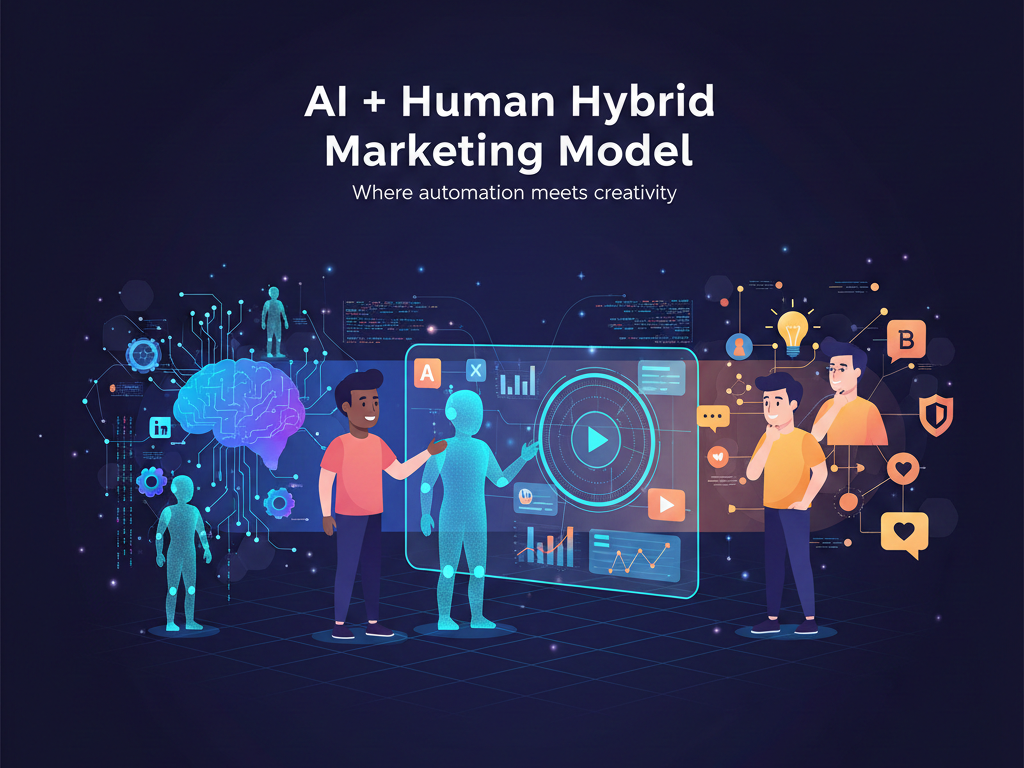
Digital marketing is growing very faster than ever. Artificial intelligence (AI) is penetrated nearly every aspect of marketing—from content creating to ad targeting – analytics and AI automation. At the same time, human marketers are playing best role through creativity, strategy, emotional intelligence, and decision-making. This has become a powerful approach known as the AI + Human Hybrid Marketing Model.
Instead of choosing one between AI and humans, Everyone is choosing both way. AI handles data, speed, and automation, while humans focus on creativity, brand storytelling, and strategy. This balance helps brands achieve better results, save time, reduce costs, and stay competitive in a changing digital Marketing environment.
In this blog, we’ll explore what the AI + Human Hybrid Marketing Model is, why is its important, how it works, its benefits, real-world use cases, and how businesses can successfully implement it.
What Is the AI + Human Hybrid Marketing Model?
The AI + Human Hybrid Marketing Model is a marketing approach in which artificial intelligence tools and human marketers work together to plan, execute, and optimize marketing campaigns.
In this model, AI is used for tasks such as data analysis, automation, performance tracking, and pattern recognition. Humans, on the other hand, handle strategic thinking, creative direction, emotional connection, and ethical decision-making.
Its pure AI marketing, which can feel robotic, or only human marketing, which is often slow and costly, the hybrid model brings the best of both. AI gives speed and smart insights, while humans add creativity, emotions, and clear direction. Together, they create better and faster marketing results.
Simply put, AI does the heavy lifting, and humans do the smart thinking.
Why Pure AI Marketing Is Not Enough
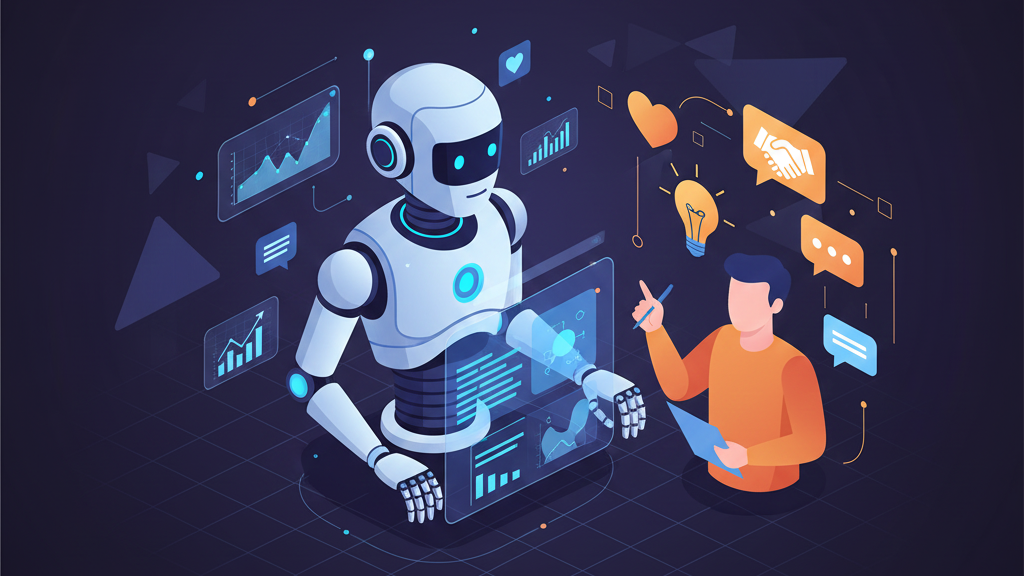
AI is powerful, but it has clear limitations when used alone.
AI does not have any emotion connection to customers. It can’t understand human emotions, cultural sensitivities, or brand values which human can do. Marketing isn’t just about data; it’s about trust, emotions, and relationships.
Second, AI-generated content often feels generic. Without human input, a brand’s voice and originality can be compromised, making the content seem repetitive or robotic.
Third, AI can’t make ethical or strategic decisions. It do every process based on data and patterns, not real-world context or a long-term vision.
Finally, AI relies heavily on the quality of data. If the data is inaccurate or biased, AI results will suffer.
Therefore, AI alone cannot give meaningful, brand-driven marketing success.
Why Human-Only Marketing Is Slowing Down Growth
While nothing can replace human creativity, relying solely on manual marketing also has its many drawbacks.
Human-based marketing is time-consuming it takes lots of time. Tasks like data analysis, reporting, testing, and performance tracking take hours and often slow down decision-making for business.
Marketers today face a very different kind of data. Without AI, analyzing customer behavior, trends, and performance becomes extremely difficult and inefficient therefore, human beings may can take wrong method for brand aur business growth.
Changing campaigns is another challenge. Manually managing ads, emails, content, and personalization is very expensive, especially for growing businesses.
Simply put, human-based marketing speed, automation, and scalability—essential in today’s competitive digital environment.
How the AI + Human Hybrid Marketing Model Works
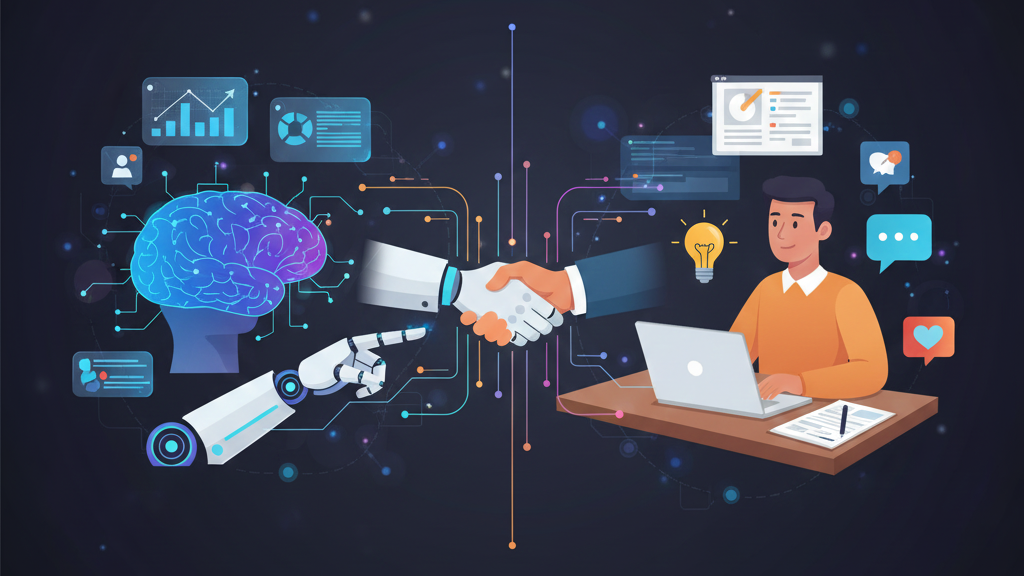
The hybrid marketing model follows a simple and effective workflow.
First, AI collects and analyzes data from multiple sources, such as websites, social media, ads, and CRM systems. It identifies patterns, trends, and performance insights.
Second, humans review these insights and use their experience to create a marketing strategy. This includes determining campaign goals, messaging, audience targeting, and brand positioning.
Third, AI assists by automating tasks like ads, email sequences, content suggestions, chatbots, and performance tracking.
Finally, humans monitor results, make strategic changes, refine creative, and ensure brand consistency.
For example, AI might identify that a specific audience responds to the best video ads. Then, a human marketer creates an engaging video story that connects emotionally with that audience.
This collaboration ensures smarter, faster, and more effective marketing.
Role of AI in Hybrid Marketing
AI plays a supportive and efficiency-driven role in hybrid marketing models.
AI assists with data analysis, processing large data sets to uncover insights that humans might miss that. It enables predictive analytics, helping marketers anticipate customer behaviour and trends.
In content marketing, AI helps with topic ideation, keyword research, content outlines, and performance optimization. In paid advertising, AI improves targeting, bidding strategies, and budget investment.
AI-powered automation tools manage many tasks like email marketing, lead nurturing, customer segmentation, and chat support.
Overall, AI improves speed, accuracy, and scalability, allowing marketers to focus on high-value work.
Role of Humans in Hybrid Marketing
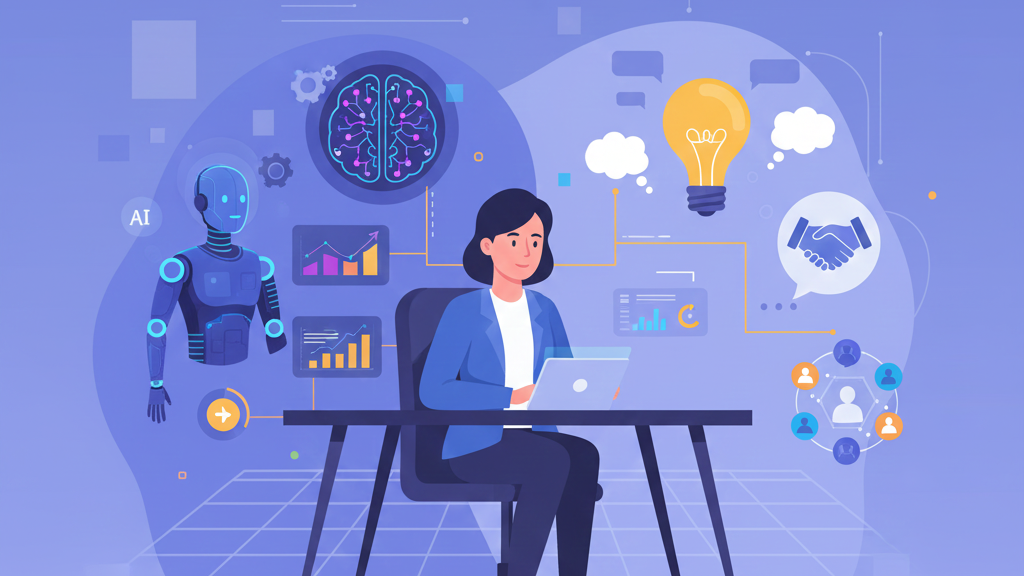
Humans bring meaning, creativity, and strategy to marketing.
They create brand stories that connect emotionally with audiences. They design creative campaigns that stand out top reach in a crowded marketplace. Humans also understand cultural context, customer pain points, and ethical boundaries.
Strategic planning is another essential human role. Determining which insights are important, how to position a brand, and when to change a campaign requires experience and judgment.
Humans also ensure quality control. They review AI-generated content, refine messaging, and maintain brand consistency across channels.
No matter how AI becomes advance, nothing can replace human creativity and emotional intelligence.
Key Benefits of the AI + Human Hybrid Marketing Model
A hybrid approach offers several significant benefits.
It helps speed up work completion by automating repetitive tasks while maintaining creative quality. Businesses can achieve better ROI through data-driven decisions and human insight.
Hybrid marketing allows for personalization at scale, creating unique experiences without sacrificing brand identity.
Costs are reduced because AI handles operational tasks, while humans focus on strategy and innovation.
Most importantly, the hybrid model provides a competitive advantage by balancing technology and human connection.
Real-World Use Cases of Hybrid Marketing
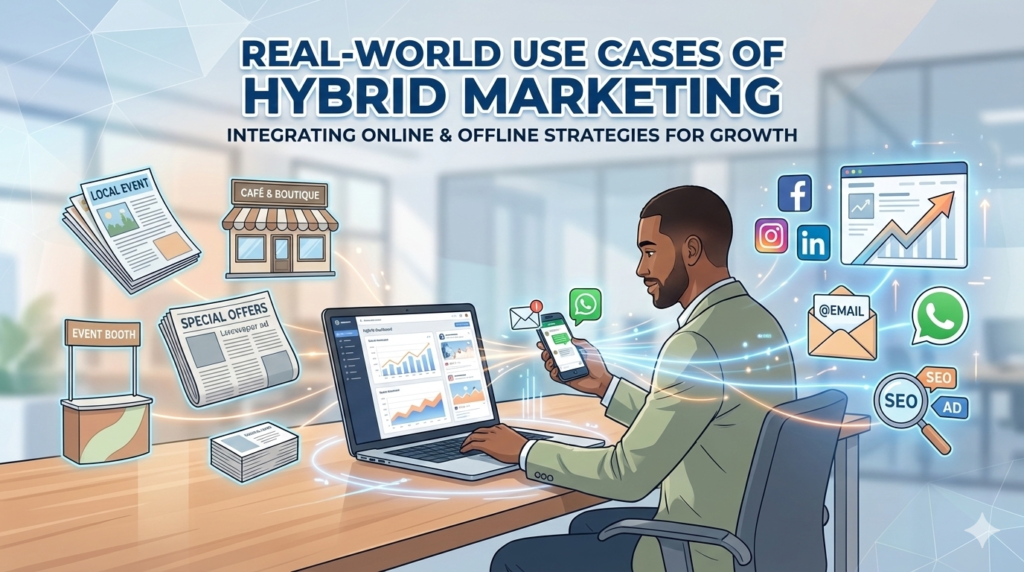
Digital marketing agencies use AI for analytics, reporting, and automation, while humans handle strategy and client communication.
E-commerce brands use AI for product recommendations and ad optimization, where as humans design campaigns and brand storytelling.
Doctors, clinics, and hospitals use AI-driven targeting and appointment automation, supported by human-created trust-building content.
Local businesses use AI for lead tracking and advertising, while humans focus on local messaging and customer relationships.
Most of the companies use AI for user behaviour analysis, combined with human growth strategies.
How Businesses Can Implement the Hybrid Marketing Model
To to a hybrid model, businesses should start by identifying repetitive and data-intensive tasks that are right for AI.
Next, they should choose reliable AI tools for analytics, automation, and content support.
Training teams to work with AI is essential. Marketers should understand how to effectively use AI insights.
Clear human approval processes should be established to maintain quality and brand voice.
Finally, businesses should regularly track performance and optimize strategies based on both AI data and human judgment.
Common Mistakes to Avoid in Hybrid Marketing
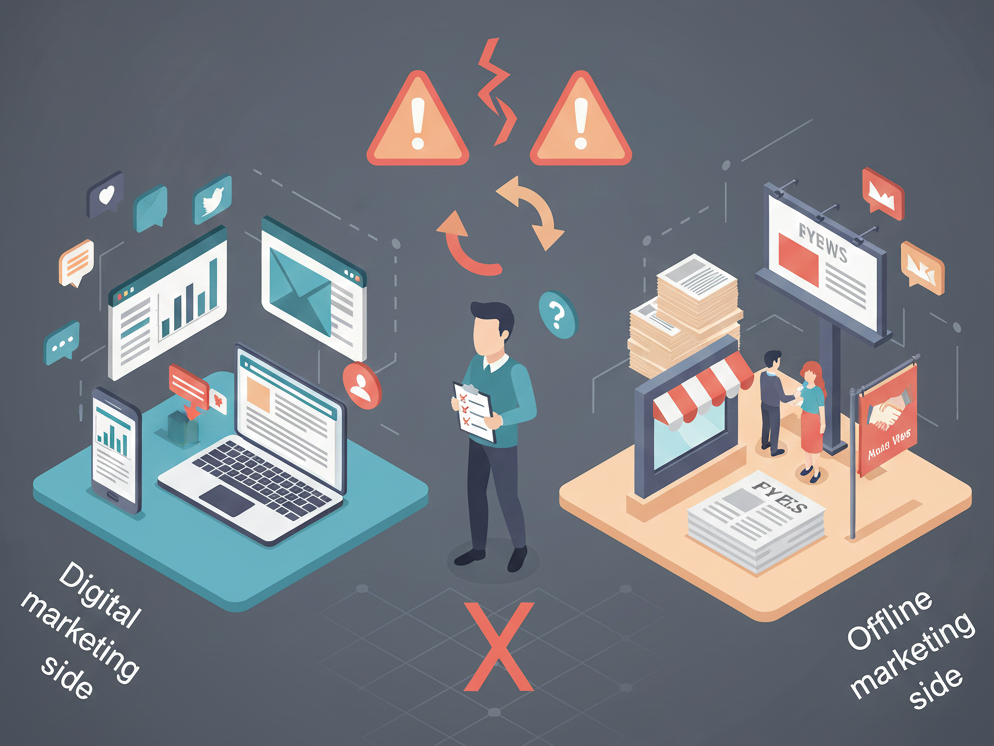
A common mistake is using AI without human beings. Another mistake is overlooking creativity and brand storytelling.
Poor data quality can lead to inaccurate AI insights. Lack of monitoring can cause campaigns to miss their target goals.
Businesses should also avoid using AI tools without a clear strategy or brand guidelines.
Is AI + Human Hybrid Marketing the Future?
Yes, a hybrid marketing model isn’t just a trend—it’s the future.
As AI grows, businesses that use both technology and human thinking will perform better than those that depend on only one. By 2026 and beyond, successful marketing will depend on balance, not substitution.
Conclusion
The AI + Human hybrid marketing model is the smartest way forward in digital marketing. By combining the speed, data, and automation of AI with human creativity, strategy, and emotional intelligence, businesses can achieve sustainable growth.
AI is a powerful assistant, but humans make the decisions. Together, they create marketing that is efficient, meaningful, and impactful.
If you want to remain competitive in the digital age, adopting a hybrid marketing approach is no longer
FAQs
1. What is AI + Human Hybrid Marketing?
Ans- It is a marketing approach where AI tools and human marketers work together to improve efficiency, creativity, and results.
2. Can AI replace human marketers completely?
Ans- No, AI supports marketers but cannot replace human creativity, emotional intelligence, and strategic thinking.
3. Which businesses benefit most from hybrid marketing?
Ans- Digital agencies, e-commerce brands, healthcare providers, big companies, and local businesses benefit greatly.
4. Is hybrid marketing expensive?
Ans- No, it often reduces costs by automating tasks and improving ROI.
5. What tools are best for AI-driven marketing?
Ans- Tools for analytics, automation, content assistance, and ad optimization work best when guided by humans.