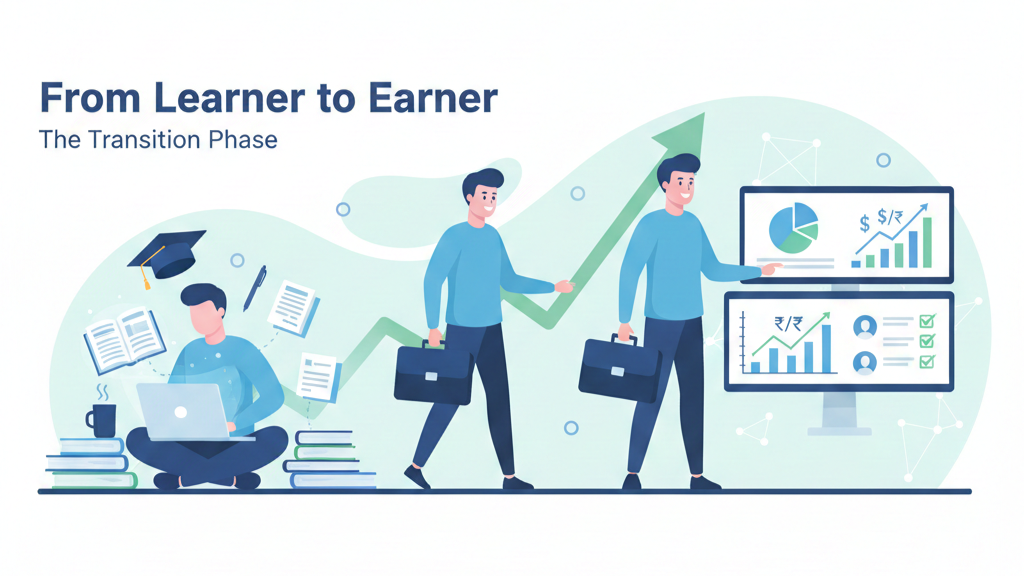
In today’s digital era, learning has never been so easy. YouTube, online courses, free blogs and tools have made knowledge accessible to everyone. But, a common problem is visible everywhere – many people are learning, but very few are earning. The reason for this is not the lack of skills, but the transition phase between learner and earner.
Being a learner seems safe because there is less pressure. Being an earner seems risky because there is performance, rejection and responsibility. Crossing this gap is the real meaning of From Learner to Earner.
Learner Stage: Collecting Knowledge
In the Learner stage, a person does only one thing – learning. Completing the courses, watching videos, making notes and collecting certificates. In this stage, it seems that if I just learn a little more, then I will become perfect. But the truth is that learning is never complete.
Confidence is often low in the Learner stage because you keep comparing yourself with experts. After watching every new video, it seems that there is still a lot left to learn. This is why people are not able to even start.
Transition Phase

The transition phase is the bridge between learner and earner. This is the time when you try to convert theory into practice. Here you have to face the challenges of the real world – client questions, deadlines, feedback and rejection.
In this phase, you are neither a complete learner nor a complete earner. This time of period makes this phase the most uncomfortable. But if you cross this stage, earning becomes automatic.
Biggest Problem: “ I am not ready right now ”
The most common excuse during the transition phase is “I’m not ready yet.” People think they’ll start when they gain confidence, and clients will approach when their portfolio is perfect. The reality is that confidence comes after taking action, not before.
You will never feel 100% ready. Even those who are earning money started with incomplete knowledge. Starting itself is proof of readiness.
Gap Between Skill And Income
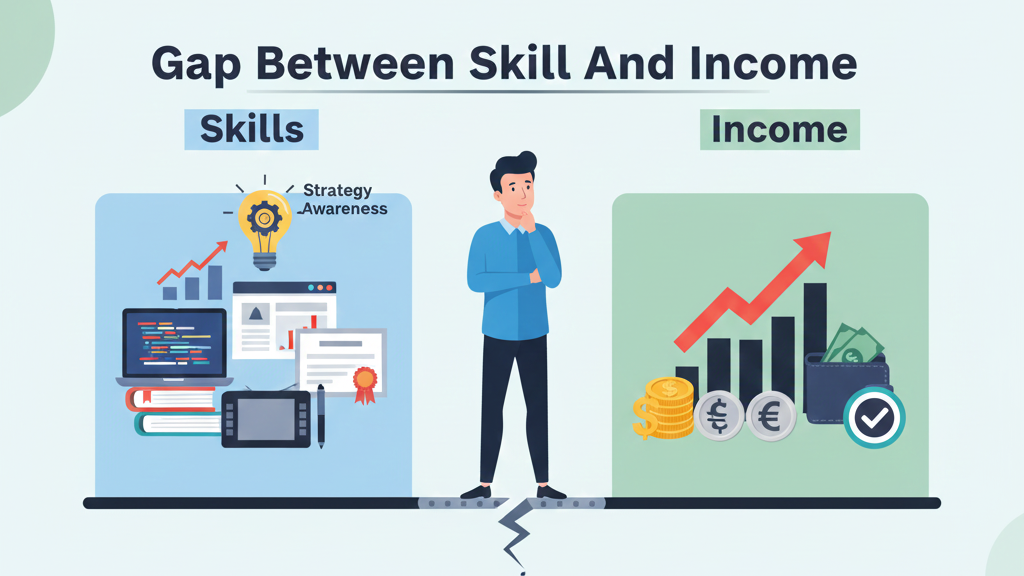
Learning a skill and earning money from it are two different things. Just because you know graphic design, digital marketing, or content writing doesn’t mean people will automatically give you money. The market doesn’t just look at skills, it looks at problem solving.
In the transition phase, you understand what the client needs and how you can provide a solution. Earning starts when you learn to present your skills as solutions.
Portfolio: Proof That You Can Deliver Results
Beginners think that a portfolio will be created when they get a client, but the truth is that a client comes only after seeing the portfolio. In the transition phase, a portfolio doesn’t mean a fancy design, but proof of real work.
You can create dummy projects, work on your own ideas, or gain experience by doing free work for a local business. A portfolio shows that you’re not just a learner, but also a maker.
First Earning: Small Amount, Big Confidence

Whether your first earning is ₹300 or ₹3000, its impact is very powerful. The first money proves that your skills can be sold in the market. From this one moment the learner mindset breaks and the earner mindset develops.
The goal of the transition phase should not be to earn more money, but to earn the first money. Once earning starts, growth becomes just a game of time and consistency.
Mindset Shift: Student To Professional
In a learner mindset, we expect someone to guide, tell, and teach us. But in an earner mindset, we have to take responsibility ourselves. The client doesn’t care whether you’re a beginner or an expert; they just want results.
In the transition phase, you will
learn to follow deadlines, improve communication, and reduce excuses. When you start thinking like a professional, earning naturally follows.
Rejection And Self-Doubt
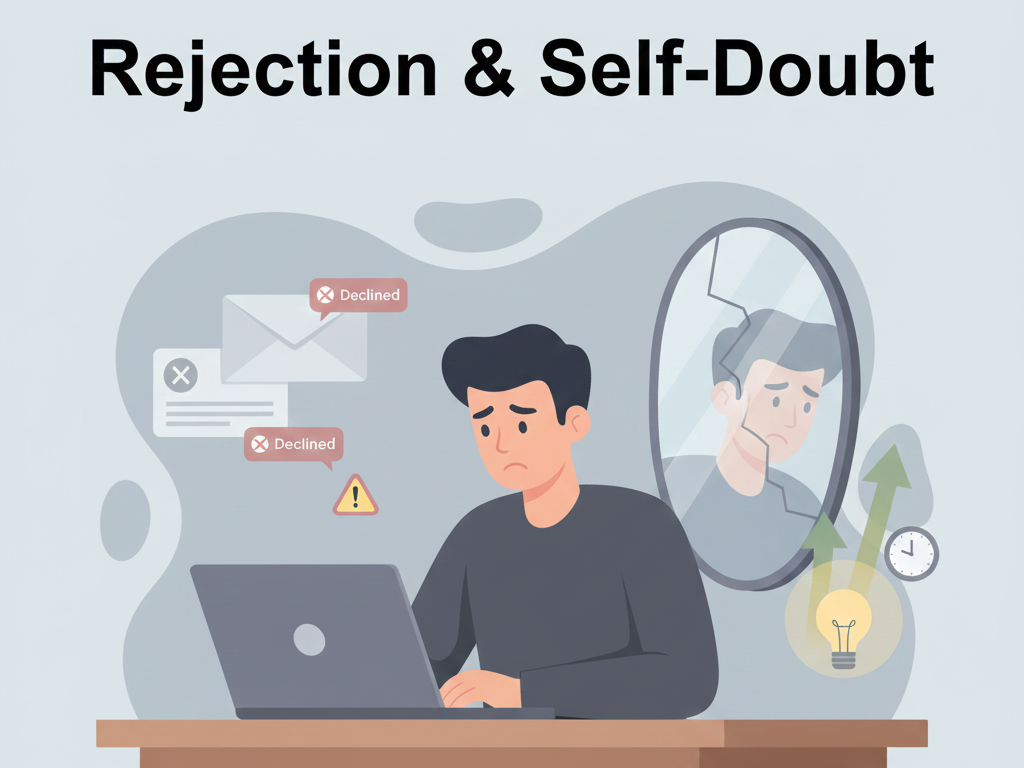
It’s perfectly normal to face rejection during this phase. Many proposals will be ignored, you won’t receive replies, and sometimes you’ll even doubt yourself. But every successful earner has gone through this phase.
The only difference is that some people stop after rejection, while others improve and move forward. The transition phase tests your patience.
Consistency: Powerful Weapon
Consistency is more important than talent during the transition phase. You can earn even with average skills if you put in a little work every day. Daily practice, regular learning, and continuous action are what shorten this phase.
For those who are consistent, the transition from learner to earner is just a process, not a struggle.
Learner To Earner Simple Roadmap
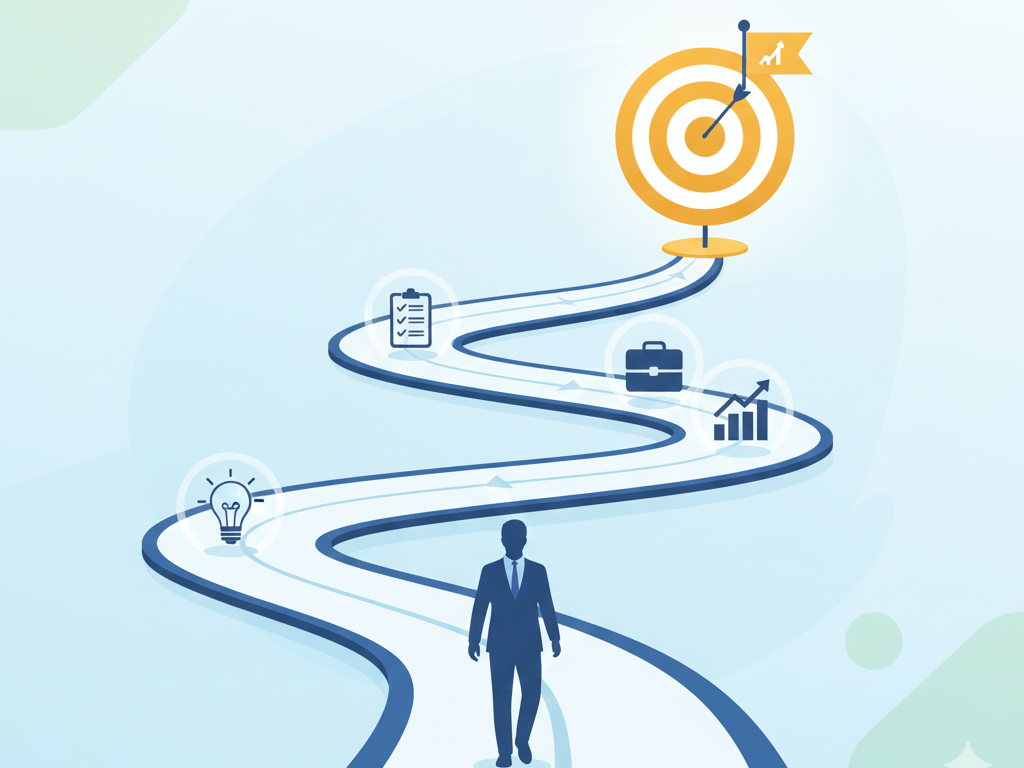
First, choose a core skill and achieve a basic level of mastery. After that, create practice projects and build a portfolio. Then, approach real people, get feedback, and keep improving. After the first earnings, confidence will come, and the process will become smoother.
Get out of overplanning and overthinking. Action is the solution to the transition phase.
Conclusion:
The journey from a being learner to becoming an earner is often uncomfortable, but this phase prepares you for real-world challenges. If you face this stage with patience and stay consistent in your efforts, earning naturally becomes a part of your career.
Always Remember—every successful earner was once a confused learner. Take every action today, and you’ll see results tomorrow.
FAQs
Q1. How long does it take to move from learner to earner?
Ans- It depends on effort, not time. With consistent action, the transition is possible within 3–6 months.
Q2. Can you become an earner without a degree?
Ans- Yes. Skills and real proof of work matter more than formal degrees.
Q3. How can beginners get their first client?
Ans- By building a strong portfolio, networking actively, and staying consistent.
Q4. What is the most important thing in the transition phase?
Ans- Taking action and not being afraid of rejection.