
Starting an E-commerce Business in India is now not a dream of people. Now there is no need of big capital and a strong technical background to start an E-commerce business. In 2026, anyone with a normal smartphone, having basic internet knowledge, and knowing the right strategy even they can build a profitable online business with very low and minimum investment. Digital payments, affordable logistics, and easy-to-use platforms have made online selling very easy and accessible to students, working professionals, homemakers, and small entrepreneurs.
This blog is specially written for the beginners who want to clearly understand how to start an e-commerce business in India, which platforms is the best, how much money is required in starting, what kind products are trending, and which mistakes we should avoid. If you are searching for online business ideas 2026 or want to know ecommerce for beginners, this blog will help you to get more knowledge about it and you can take your first confident step.
Why Trending: More People Want Online Business With Less Risk
From the last few years, India has growth rapidly in digital era world. Many of the Customers now comfortable for online shopping for everything—from clothes, gifts, groceries, electronics, and home decor. Presence of faster internet, UPI payments, and reliable delivery networks has completely changed the buying behaviour of human beings.
In 2026, e-commerce business is trending more than before because it offers much freedom, flexibility, and scalability. Unlike traditional businesses, you don’t have to invest lakh of rupees or rent a shop for your business in a prime location.
Why E-commerce in 2026 ? (Reason)
- Low investment, high reach: You don’t need to rent a physical shop. You can reach customers across India from day one.
- Work from anywhere: Your home can become your office. You only need a phone or a laptop.
- Less risk from offline business: No shop rent, no electricity bills, and no staff expenses.
- Many platforms available: Amazon, Flipkart, Meesho, and your own website can give many option to sellers.
- Growing digital payments & logistics: UPI, COD, and fast delivery services make online business selling very easy and smooth.
For beginners, e-commerce offers the perfect balance between opportunity and risk. That’s why more people want to start ecommerce business in India instead of investing in traditional offline businesses.
What is E-commerce?
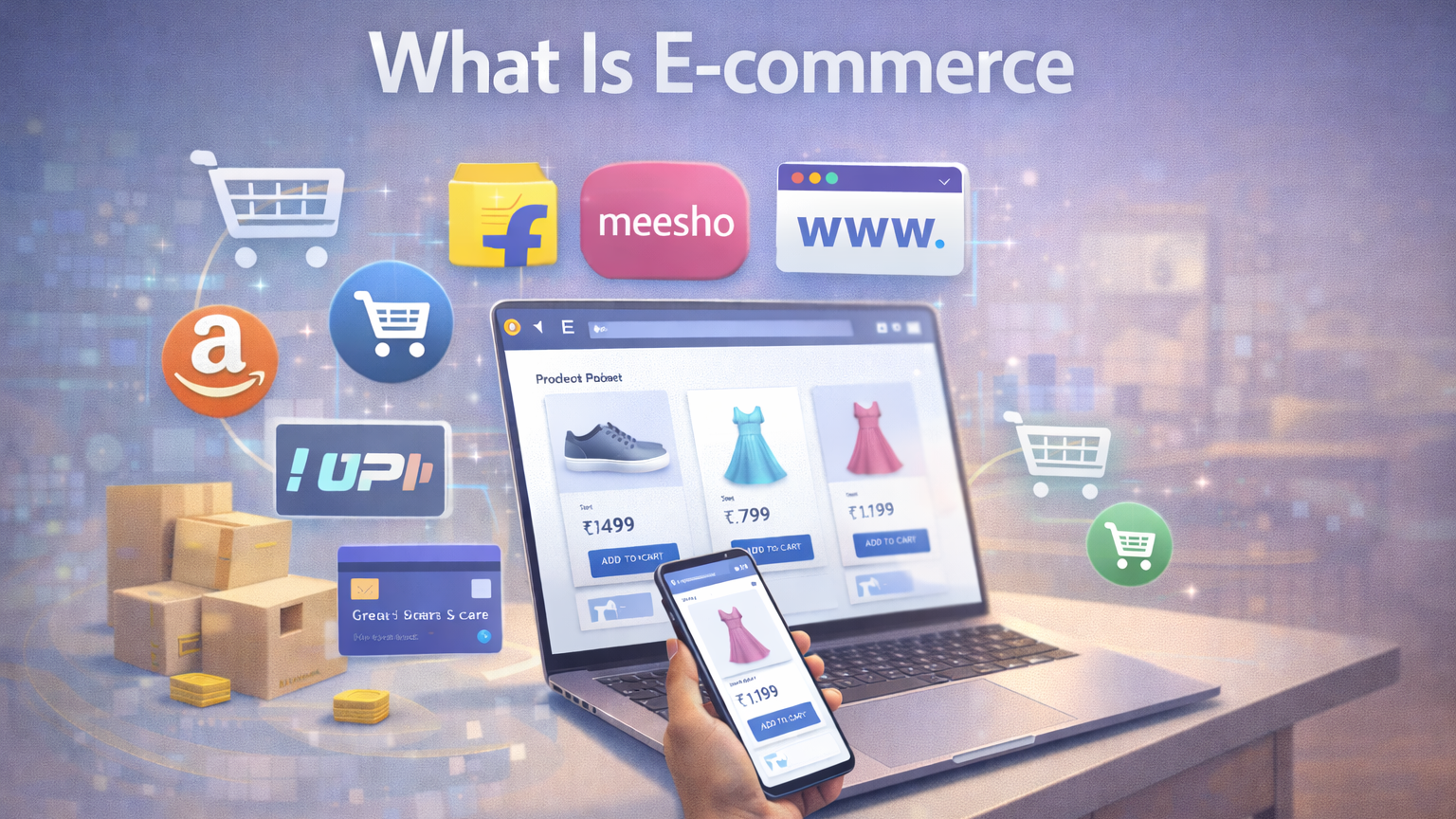
E-commerce means selling the products online using a online digital platforms. without renting or having a physical store. In simple way, when you sell products or something on the internet and deliver it to customers at their current living location, that is called e-commerce.
You can also sell your own products, also resell someone others products, or even sell customized items based on customer orders. Payments are collected online or through cash on delivery, and products are shipped using courier partners.
Popular E-commerce Platforms in India
Let’s understand the most popular platforms where beginners can start.
1. Amazon
Amazon is one of the biggest e-commerce marketplaces in India. As a seller, you can list your products and use Amazon’s delivery and payment system. Customers trust Amazon, which helps in getting orders faster.
Best for: Branded products, electronics, home items
Challenges: High competition, commission fees, strict policies
2. Flipkart
Flipkart is another major Indian marketplace, especially strong in electronics, fashion, and home products. It offers good reach but also demands competitive pricing and consistent performance.
Best for: Fashion, appliances, lifestyle products
Challenges: Price competition and return management
3. Meesho
Meesho is extremely beginner-friendly and ideal for people who want to start with very low investment. It works well for reselling, customized products, and fashion items. Many first-time sellers and small entrepreneurs start from Meesho.
Best for: Low-budget sellers, reselling, customized gifts
Challenges: Lower average order value
4. Own E-commerce Website
You can also sell through your own e-commerce website using platforms like WordPress + WooCommerce or Shopify. This option gives you full control over branding, pricing, offers, and customer data.
Best for: Long-term brand building
Challenges: Need marketing and traffic generation
Each platform has its own advantages and limitations. The right choice depends on your budget, product category, and long-term goals.
Minimum Investment Required to Start E-commerce Business in India
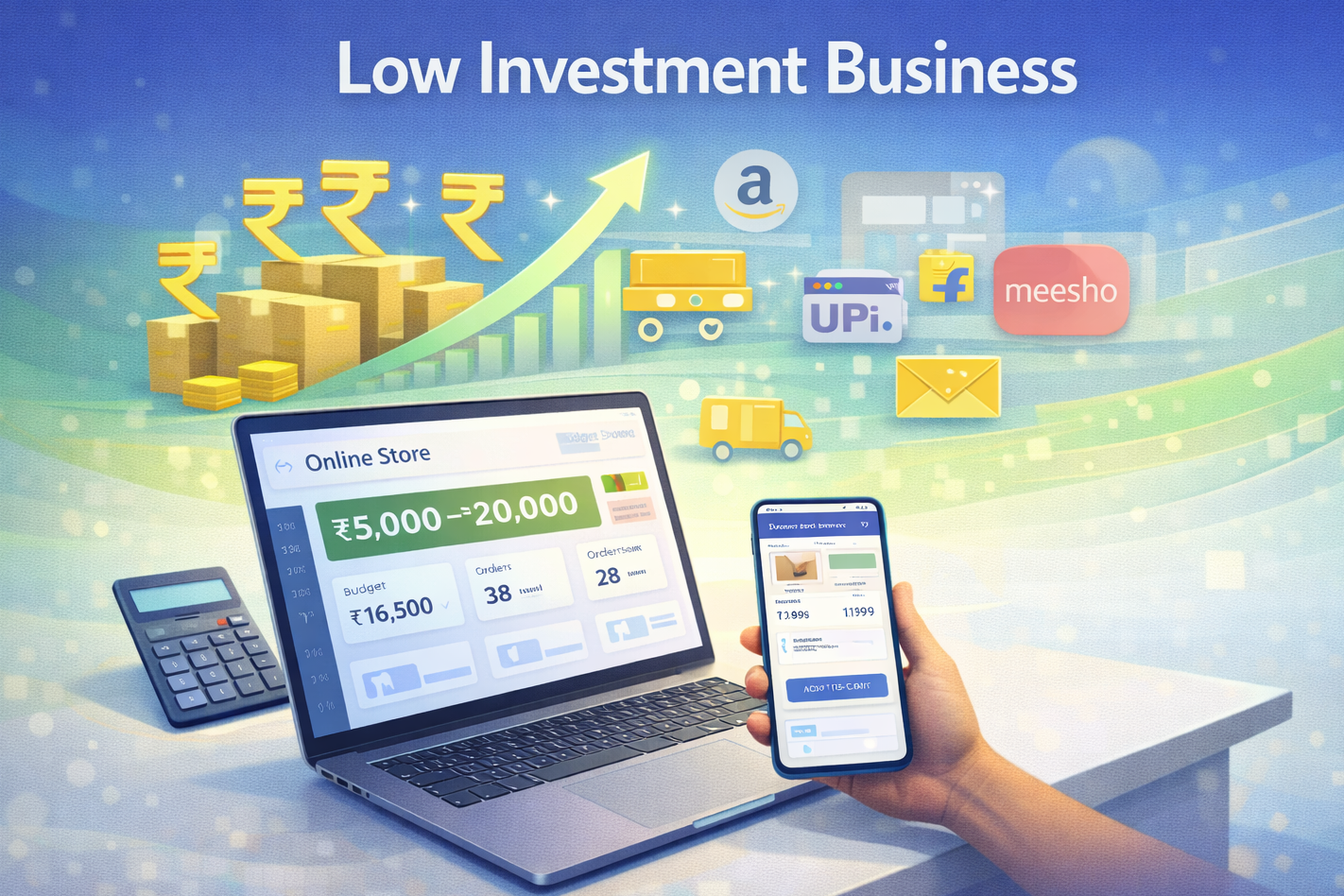
One of the biggest myths is that e-commerce requires huge investment. In reality, you can start with as little as ₹5,000 to ₹20,000, depending on the business model you choose.
Approximate Low-Investment Cost
- Product sourcing and samples: ₹2,000 – ₹8,000
- Packaging & basic branding: ₹1,000 – ₹3,000
- Platform fees, ads: ₹2,000 – ₹5,000
- Website setup : ₹3,000 – ₹8,000
You don’t need to invest in everything at that time only. Many of the successful sellers has started with a very small budget and make profits gradually.
Low-Investment E-commerce Business
1. Reselling Model
In this model, you list products from suppliers and earn margin on every sale. You don’t keep inventory.
Best for: Absolute beginners
2. Print-on-Demand / Customized Products
Products are manufactured only after the customer places an order.
Best for: Creative sellers, gift businesses
3. Dropshipping
The person who is supplier ships the product directly to the customer.
Best for: Testing multiple products
With smart planning, you can easily start ecommerce business in India without financial pressure.
Best Product Categories for E-commerce in 2026
Selecting a good and the right product is more important than choosing the online platform. In 2026, many of the customers prefer to buy unique, useful, and personalized products.
1. Customized Products
Customized products is a strong way for the fastest-growing in e-commerce.
Examples:
- Customized t-shirts and hoodies
- Photo mugs and cushions
- Name-printed phone covers
- Couple and gift items
Why this category works:
- High emotional value
- Less price comparison
- Better profit margins
This category is ideal for beginners with low investment.
2. Fashion & Accessories
Fashion never goes out of trend, but niche-focused fashion performs best in 2026.
Examples:
- Women ethnic wear
- Trendy imitation jewelry
- Minimalist accessories
- Streetwear
3. Home Decor
People who are working from home, is demanding more for home decor items.
Examples:
- Wall frames and posters
- LED lights and decor items
- Handmade aesthetic products
- Spiritual and festive decor
Home decor products work well on marketplaces and even better on your own website.
Own Website vs Marketplace: Which Is Better for Beginners?
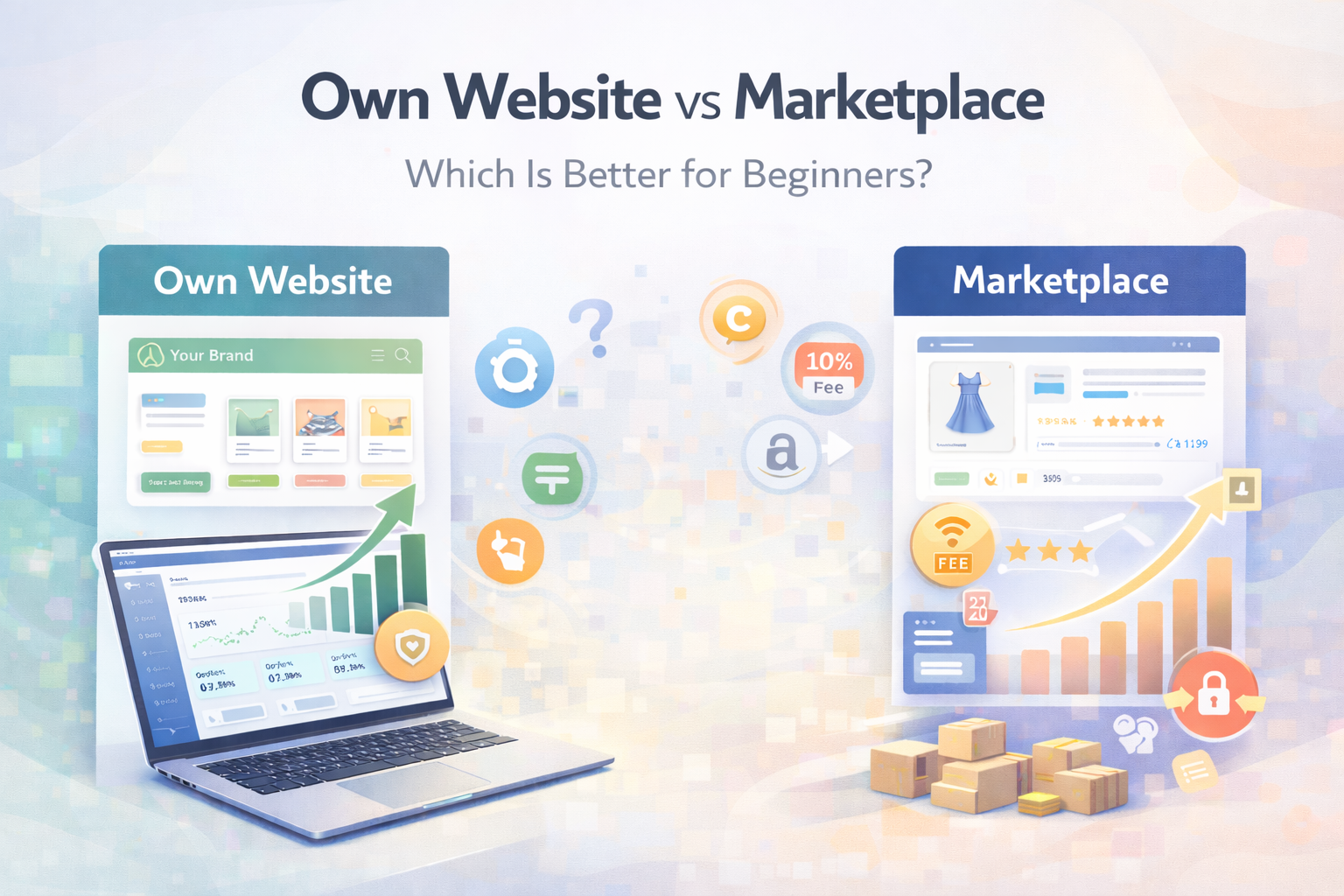
The most common questions in ecommerce for beginners.
Selling on Amazon, Flipkart or Meesho
Pros:
- Ready-made customer base
- Trust and logistics handled
- Easy and quick start
Cons:
- High competition
- Commission and fees
- Limited branding
- Price wars
Selling on Your Own Website
Pros:
- Full control over brand
- Higher profit margins
- Customer data ownership
- Long-term business asset
Cons:
- Need traffic and marketing
- Slight technical setup
Best Strategy for 2026
Start with a marketplace to understand customers and products. Once you have started to get regular orders, build your own website, make it brand and grow for long-term.
Common Mistakes in E-commerce
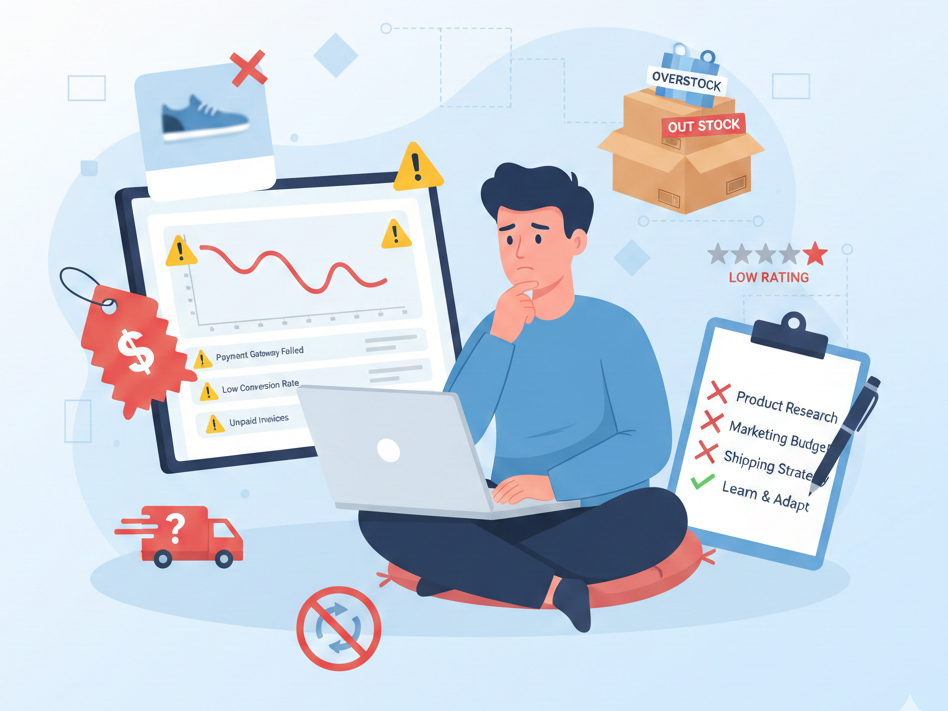
Many people fail in e-commerce not because the market is bad, but because of basic mistakes.
1. Starting Without Research
Launching products without checking demand, competition, and pricing is the biggest mistake beginners make.
2. Competing Only on Price
Low pricing attracts customers but kills profit. Branding and value matter more in the long run.
3. Poor Product Images & Descriptions
Online customers rely on visuals. Poor images reduce trust and conversions.
4. Ignoring Branding
Without branding, customers won’t remember you. You will always depend on discounts.
5. Lack of Patience & Consistency
From E-commerce you can not get-rich-quickly. In this Growth takes time, testing, and consistency.
Final Thoughts:
E-commerce in India is still growing rapidly, and in 2026 huge opportunities for beginners are available who start smartly.
Important Key Points:
- Choose the right product
- Start with low risk
- Learn basic marketing skills
- Build your brand with process and step-by-step
If you want to start an E-commerce Business India, it is the best time to take an action right now. Start small, learn fast, and grow by consistently. With the help of patience and the right strategy, e-commerce business can become a strong and sustainable income source in 2026.