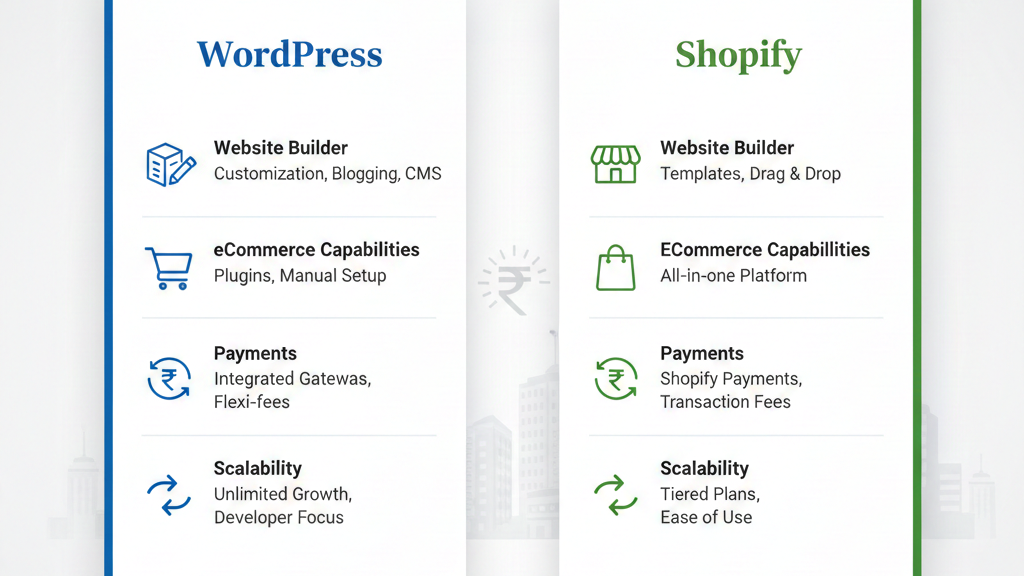
Choosing the right e-commerce platform is one of the most important decisions for any Indian company looking to sell online. — Whether you are a small home-based seller of sublimation t-shirts, a local shop in Darbhanga, or a growing digital-marketing agency helping clients list on Amazon and Meesho. Two names keep coming up: WordPress and Shopify. Both can create beautiful, functional stores—but they operate very differently, and the best option depends on what you plan to sell, how much control you want, and how much time or money you can invest.
This guide walks through Indian payment and logistics realities, SEO and marketing, and a final recommendation tailored for typical Indian business scenarios.
which platform does-what best
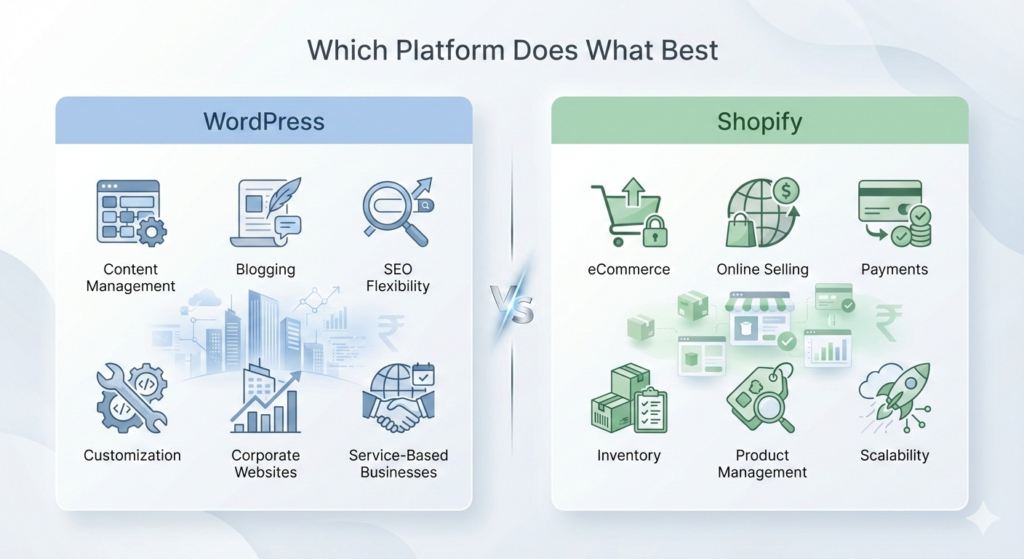
- WordPress + WooCommerce: It’s best if you want complete control, flexibility, a low entry cost, and the ability to scale and customize extensively. It’s best for content-driven stores, sellers who want advanced SEO and marketing control, and businesses that don’t mind a little technical work (or hiring someone to do it).
- Shopify: It’s best if you want a fast, low-maintenance, plug-and-play way to sell. It’s great for small to medium stores, entrepreneurs who appreciate simplicity, or teams with low technical skills who need reliable hosting, payment integration, and support.
Control & flexibility
WordPress (WooCommerce)
WordPress is an open-source content management system. With WooCommerce (a WordPress plugin), you can turn your site into a full-fledged store. This means complete control over the design, checkout flow, product data, custom fields, integrations, and database access. Want to add custom shipping rules, complex product bundles, or connect to an in-house inventory system? WordPress generally lets you do this—either through a plugin or custom code.
Shopify
Shopify is a hosted SaaS (Software as a Service). It limits some low-level changes to maintain stability and security. You get a theme system, apps, and APIs—and many standard requirements are met—but deep customization can be difficult or more expensive. If you need very specific functionality that Shopify apps don’t offer, you may reach limits.
Bottom line: Choose WordPress if you need complete control and custom features. Choose Shopify if you want a system that can handle most common store needs without any hassle.
Cost — short term vs long term

WordPress
Initial costs can be low: you can get started cheaply with a basic hosting plan, a domain, and a theme. But costs vary: premium themes, paid plugins (for payment, shipping, product add-ons), and developer time add up. If your host doesn’t offer SSL (often provided), backup, and security, you’ll need to pay for these separately.
Shopify
The estimated monthly plan includes hosting, security, and key features. Unless you use Shopify Payments, you’ll need to pay app fees for additional features and transaction fees (availability varies by country). Because more infrastructure is involved, the total cost is often higher monthly than basic WordPress hosting, but less hands-on.
Bottom line: WordPress can be cheaper if you set it up yourself or choose low-cost hosting—but costs can add up with plugins and development. Shopify is predictable and easy to budget for, but monthly fees can be high for similar functionality.
Setup & maintenance
WordPress
More hands-on. You’ll install WordPress, choose hosting, secure the site, set up WooCommerce, add a payment gateway, configure shipping and taxes, and manage plugin updates. This sounds technical, but many Indian hosts offer managed WordPress plans and one-click WooCommerce installs. Maintenance (security patches, plugin updates, backups) is ongoing.
Shopify
Very low-maintenance. Shopify manages hosting, updates, backups, and security. You focus on products and marketing. Setup is usually faster and has a smaller learning curve.
Bottom line: If you don’t want to manage the technical side, Shopify saves time and your every minutes. If you enjoy control system or have a developer, WordPress is fine.
Payments, taxes & Indian realities
Both of the platforms support Indian requirements — but with differences:
Payment gateways
- WordPress/WooCommerce: You can do payment by Indian gateways like Razorpay, PayU, Cashfree, Instamojo, etc. Plugins are widely available.
- Shopify: Supports many of the Indian payment gateways via apps or built-in integrations, but availability and fees can differ. Shopify Payments (Shopify’s in-house processor) may not be available in India for all merchants, meaning third-party gateway fees or transaction fees can apply.
GST & taxes
Both platforms let you to know tax rules. WooCommerce offers tax and invoice plugins for Indian GST needs. On Shopify, tax configuration is simpler but you may need apps for advanced GST invoicing or HSN/SAC codes.
Logistics & shipping
Integration with Indian courier aggregators (Delivery, Shiprocket, Ecom Express, etc.) is possible on both platforms; again, WordPress offers many plugins and the ability to build custom APIs, while Shopify depends on apps.
Bottom line: Both are usable in India — if GST, custom invoices, or specific payment/shipper integrations are important, WordPress gives more control and plugin choices; Shopify is simpler but may require paid apps.
SEO, content & marketing

WordPress
WordPress is best and standard for content and SEO. The platform was built for content, and plugins (Yoast, Rank Math) give fine control over meta tags, sitemaps, structured data, breadcrumbs, and content optimization. If your marketing strategy depends heavily on blogging, long-form content, or complex SEO, WordPress is Best.
Shopify
Shopify does SEO well for typical e-commerce pages: clean URLs, fast hosting, and basic SEO controls. However, it’s less flexible for advanced content structures, custom schema, or complex blog features.
Bottom line: For content-led growth (blogs, resources, SEO), WordPress wins. For store-first marketing where product pages and paid ads dominate, Shopify is sufficient.
Design & themes
WordPress
Huge ecosystem of themes and page builders ( Elementor, Beaver, etc.). You can create almost any layout and user experience. That’s great for brands that need a unique look.
Shopify
Beautiful, professionally designed themes focused on conversions. Easy to customize through theme settings and the theme editor. For many small businesses, Shopify themes look premium without a designer.
Bottom line: WordPress for unique brand experiences; Shopify for polished, conversion-focused themes out of the box.
Scalability & performance
Both platforms can scale. Shopify handles scaling automatically (Shopify manages traffic spikes). With WordPress, you’ll need to choose hosting that can scale (managed hosting, CDNs, caching). If you expect large seasonal spikes (festival sales, large campaigns), Shopify’s hosted nature reduces the ops burden.
Extensions & ecosystem
- WordPress has a massive plugin ecosystem: payment gateways, shipping, marketplaces, invoicing, LMS, membership, and more.
- Shopify has a curated app store with many commerce-focused apps. While robust, some enterprise features may only be available via paid apps.
Which one suits common Indian business profiles?
- Home-based sellers (T-shirts, custom gifts, Meesho/Amazon sellers):
- If you’re testing product-market fit or need a quick store with minimal tech overhead → Shopify.
- If you want to build a brand site with blog content and control costs long-term → WordPress.
- Small retail stores / local businesses expanding online:
- Prefer simplicity + reliable hosting → Shopify.
- Want to run content marketing, local SEO, and custom booking/invoice systems → WordPress.
- Agencies or sellers planning multi-channel scale (Amazon, Meesho, own store):
- Need custom integrations, advanced automation, and flexibility → WordPress (or a headless approach).
- Need simple channel management and quick store setups for multiple clients → Shopify (Shopify Plus for enterprise).
- Nonprofits or service-oriented sites (NGO, education, memberships):
- WordPress — easier to combine content, donations, membership, and stores.
(If you—as I recall from your profile—are running a digital marketing agency and listing on Amazon or building a WordPress NGO site, WordPress will feel familiar and powerful enough to branch out into content and custom integrations.)
Practical checklist to decide (quick)

- Want total control, custom features, advanced SEO, and lower starting cost → WordPress + WooCommerce.
- Want simplicity, fast setup, lower ops work, and predictable costs → Shopify.
- Need enterprise support, lots of apps, or effortless scaling → consider Shopify (or managed WordPress hosting for scale).
- Must support specific Indian payment gateways, GST invoices, or courier integration? Both can — but WordPress gives more plugin options and customization.
Final recommendation
For most Indian small businesses and creators who value speed and simplicity (and don’t need heavy customization), Shopify is a great option for launching quickly and reliably.
For businesses looking to build a brand with content, need deep customization, or are planning complex integrations (e.g., multi-channel sellers, NGOs, or agencies), WordPress + WooCommerce is a better long-term investment.
If you’re unsure: Start with a simple Shopify or managed WordPress plan and validate your first 3–6 months of sales. If you outgrow Shopify’s limitations, you can migrate to WordPress later (migrations are common). If you’re okay with a little setup overhead and want full ownership from day one, start with WordPress.
Quick setup roadmap (first 30 days)
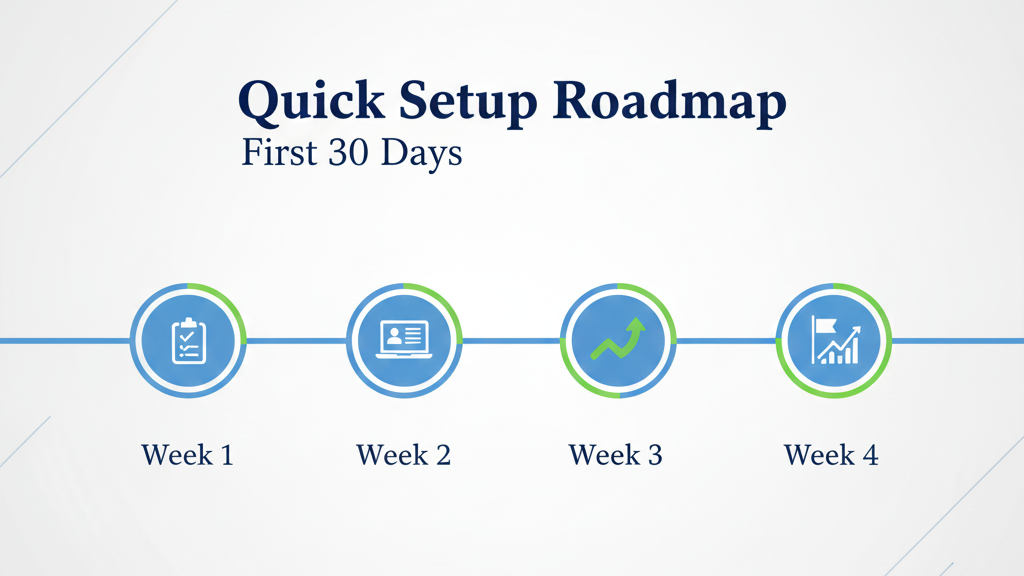
- If Shopify: pick a conversion-focused theme, set up Razorpay/PayU/Cashfree via app, add courier integration, list 20 products, set up basic SEO, and run a small FB/Instagram campaign.
- If WordPress: pick managed host + SSL, install WooCommerce, integrate Indian payment gateway plugin, install SEO plugin (Rank Math/Yoast), configure GST invoice plugin, and publish product pages + 3 blog posts for organic traffic.
FAQs
Q2: Which is cheaper for small sellers in India?
Ans: WordPress can be cheaper initially if you self-host and avoid premium plugins, but total cost depends on plugins and development. Shopify has predictable monthly fees.
Q3: Is migration between the two platforms hard?
Ans: No — product data, customers, and orders can be exported/imported, but custom features, themes, and SEO structure may need careful handling.
Q4: Which platform is better for SEO?
Ans: WordPress has stronger content and SEO tools, making it preferable for content-led SEO
Q5: Can I integrate my store with Amazon/Meesho?
Ans: Yes — both platforms support multichannel selling through plugins, apps, or third-party tools.