
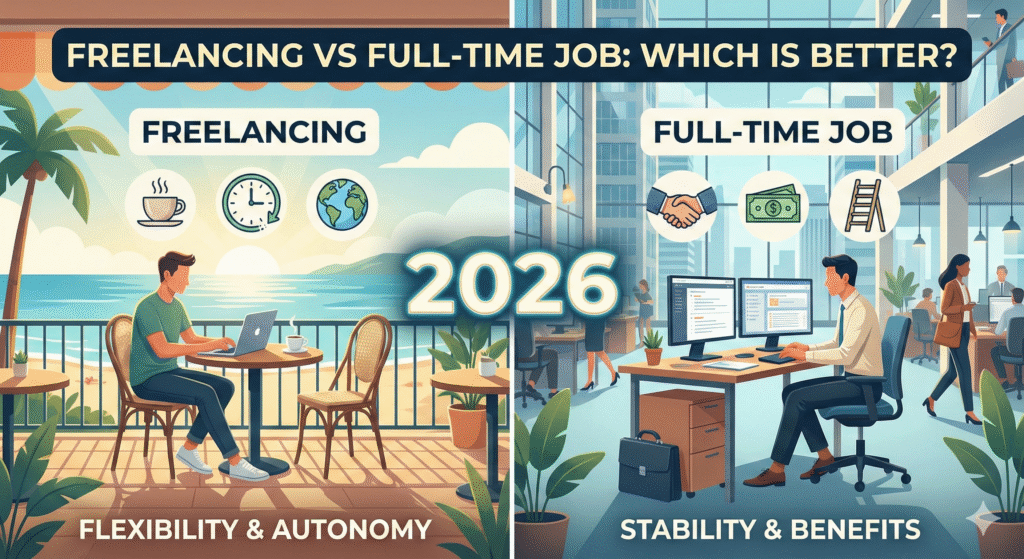
Introduction: The Biggest Career difficulty of Our Life
A few years ago, choosing between a full-time job and freelancing was simple. A job meant security, respect, and stable income. Freelancing was seen as risky, uncertain, and temporary. But as we move closer to 2026, this mindset is rapidly changing.
Remote work has become normal. AI tools are replacing routine jobs. Global clients are hiring talent directly instead of building large office teams. Young professionals are earning from laptops instead of office cabins. Because of all these changes, one powerful question is now on everyone’s mind:
Freelancing vs Full-Time Job — which is better in 2026?
Students are confused. Employees feel stuck. Business owners are shifting to contract-based workers. Everyone is searching for freedom, stability, and growth at the same time. This blog will give you a clear, honest, and practical comparison so you can decide what truly fits your life, not just your income goals.
What Is Freelancing in 2026?
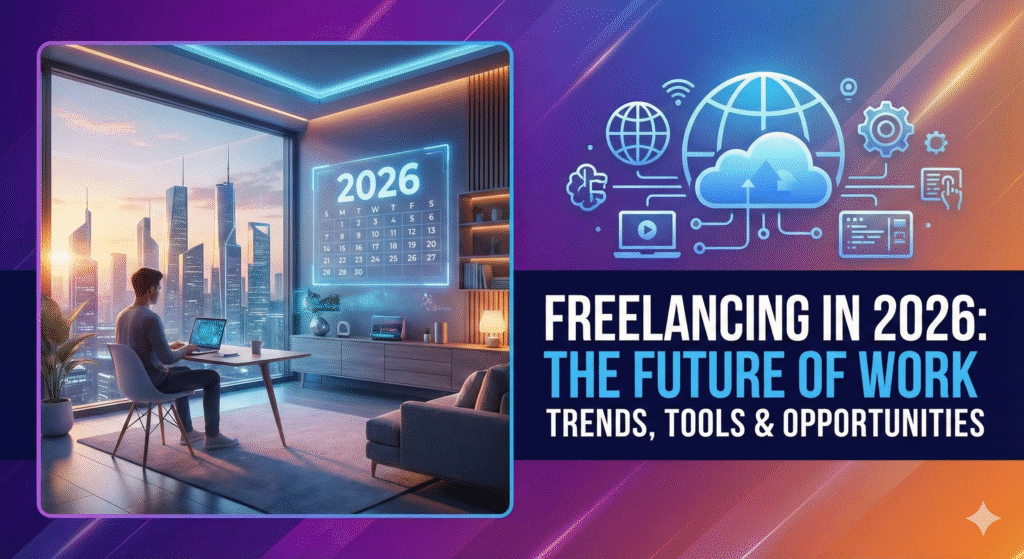
Freelancing in 2026 is no longer limited to graphic designers or writers working from their bedrooms. It has become a full-fledged global career system.
Today, freelancers work as:
- Digital marketers
- Video editors
- AI prompt engineers
- Website developers
- Automation experts
- Content strategists
- Virtual assistants
- Data analysts
Instead of waiting for companies to offer jobs, freelancers create personal brands, build portfolios, and attract clients from across the world. Platforms like Fiverr, Upwork, and Freelancer still exist, but most high-earning freelancers now get clients through LinkedIn, Twitter (X), YouTube, and personal websites.
In 2026, freelancing is not just about doing tasks. It is about selling solutions, managing clients, building systems, and growing income like a business.
What Is a Full-Time Job in 2026?
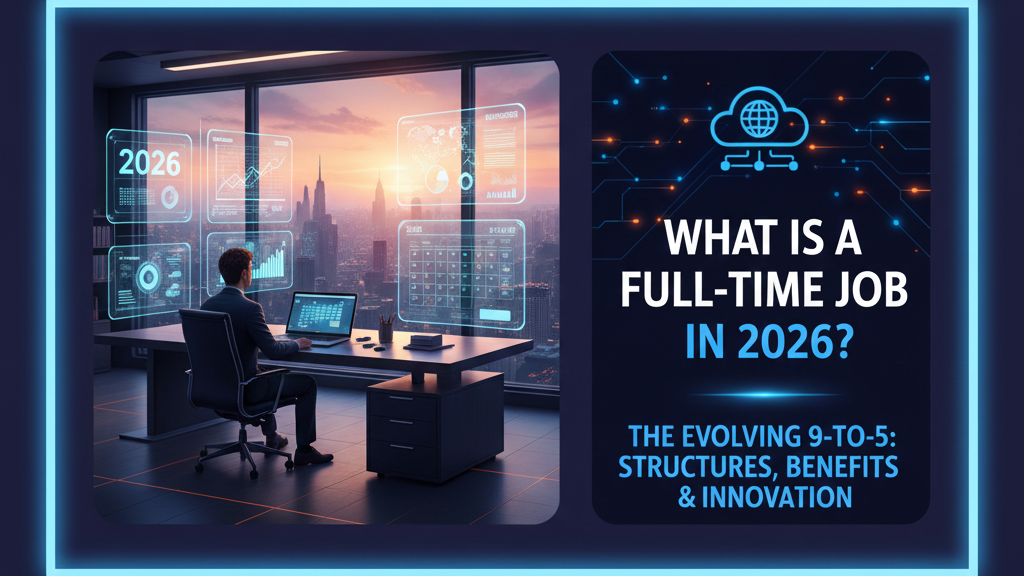
The concept of a full-time job has also changed, but at a slower pace. Today’s jobs are more flexible than before. Many companies offer:
- Hybrid work
- Remote jobs
- Flexible timings
- Performance-based bonuses
Still, a full-time job means:
- Fixed working hours
- Fixed monthly salary
- Reporting to managers
- Following company rules
- Annual appraisals
In 2026, corporate jobs are becoming more skill-focused and tech-driven. However, job security is no longer guaranteed due to automation and business instability.
Income Comparison: Freelancing vs Full-Time Job
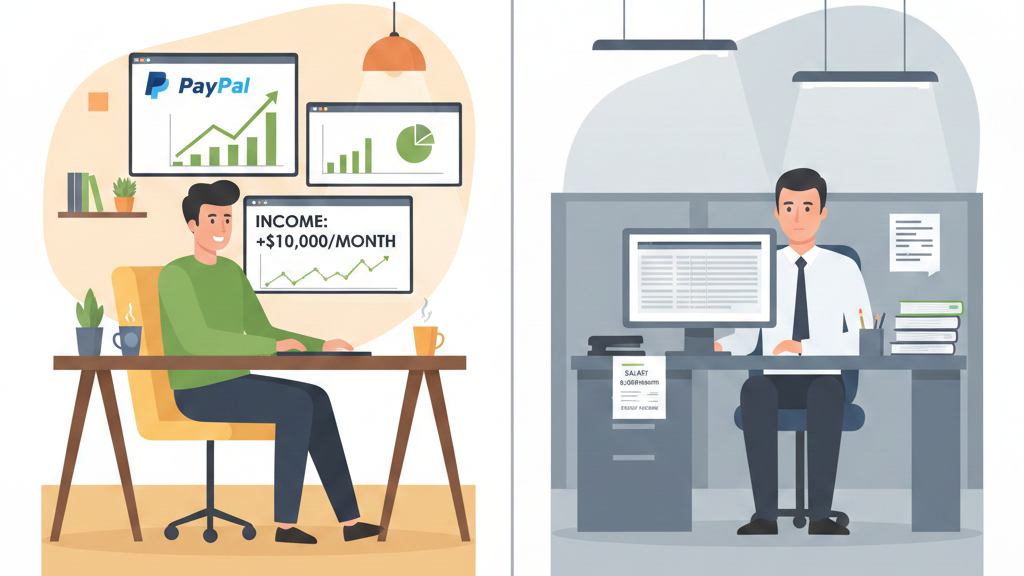
Income is the biggest reason people shift careers.
Freelancing Income in 2026
Freelancing income has no fixed limit. Beginners may earn:
- ₹15,000–₹30,000 per month initially
But skilled freelancers can scale to:
- ₹1–5 lakh per month
- Some even cross ₹10 lakh per month
Income depends on:
- Skills
- Client quality
- Pricing strategy
- Consistency
- Branding
A freelancer can increase income anytime by:
- Raising prices
- Adding new services
- Hiring a small team
- Creating digital products
Full-Time Job Income in 2026
A job provides:
- Fixed monthly salary
- Increment once a year
- Bonus based on performance
A fresher may start at:
- ₹15,000–₹30,000 per month
After 5–8 years of experience:
- ₹60,000–₹1.2 lakh per month
But growth is limited by:
- Company policies
- Designation
- Department
- Location
Final Income Verdict
Freelancing offers unlimited income potential. Jobs offer income stability but slow growth. If your goal is fast financial growth, freelancing wins. If your goal is predictable monthly income, a job feels safer.
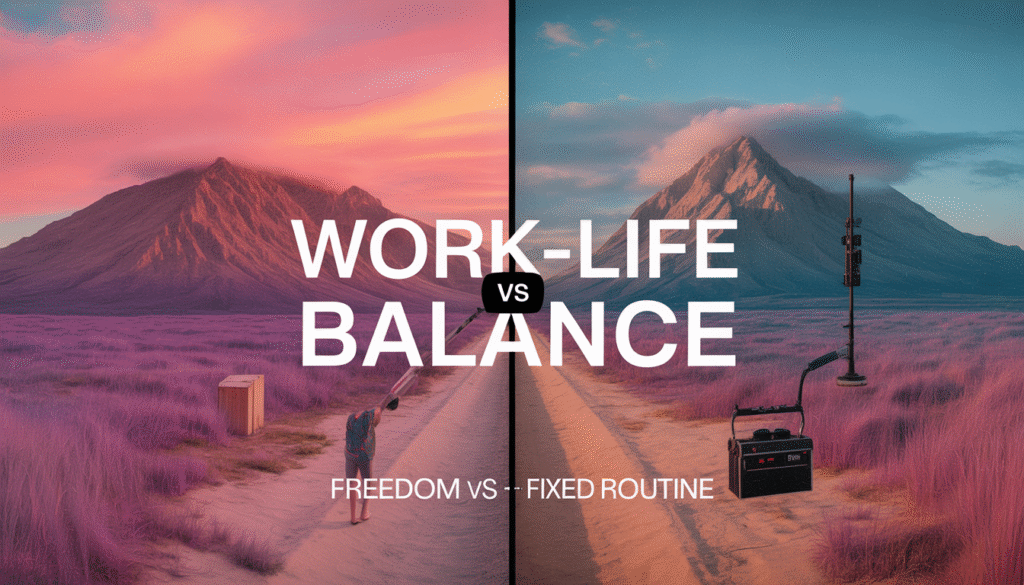
Work-Life Balance: Freedom vs Fixed Routine
Freelancing Lifestyle
Freelancers enjoy:
- Flexible working hours
- Work from anywhere
- No daily commute
- Control over workload
But they also face:
- Late-night client calls
- Weekend work
- Irregular schedules
- Mental pressure to stay consistent
Full-Time Job Lifestyle
Employees enjoy:
- Fixed working hours
- Paid leaves
- Weekends off
- Clear work boundaries
But they also deal with:
- Office politics
- Traffic and commute
- Time restrictions
- Boss dependency
Work-Life Balance Verdict
Freelancing gives freedom, but requires discipline. Jobs give routine, but limit flexibility. True balance depends on how well you manage your time in either path.
Job Security vs Skill Security
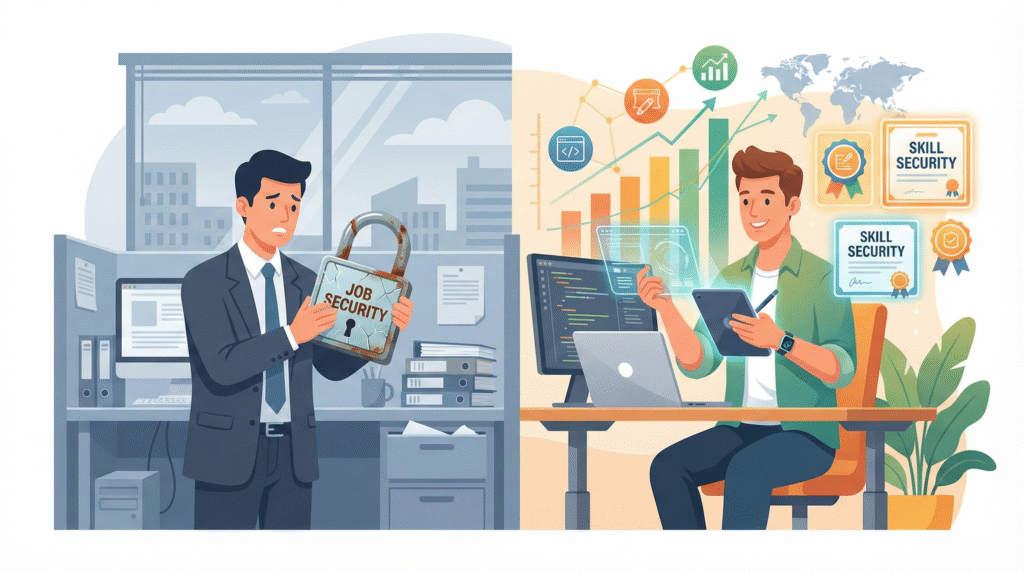
Earlier, job security was everything. Today, skill security is becoming more powerful than job security.
Job Security Reality in 2026
- Layoffs are frequent
- AI is replacing repetitive roles
- Companies prefer contract workers
- Long-term employment is uncertain
Even top employees face sudden job loss due to:
- Company losses
- Market crashes
- Mergers
- Automation
Skill Security in Freelancing
Freelancers survive on:
- High-demand skills
- Market relevance
- Continuous learning
If one client leaves, another can be found. As long as you upgrade your skills, your income remains secure.
Security Verdict
Jobs offer temporary stability. Freelancing offers long-term survival based on skills.
Career Growth & Learning Opportunities

Freelancing Growth
- Exposure to multiple industries
- Work with international clients
- Learn business, sales, marketing
- Faster real-world experience
- Personal brand growth
Job Growth
- Promotions take years
- Limited to one department
- Skills grow slowly
- Learning depends on company
Growth Verdict
Freelancing offers fast, wide, and practical growth. Jobs offer slow but structured growth.
Daily Life: Freelancer vs Employee
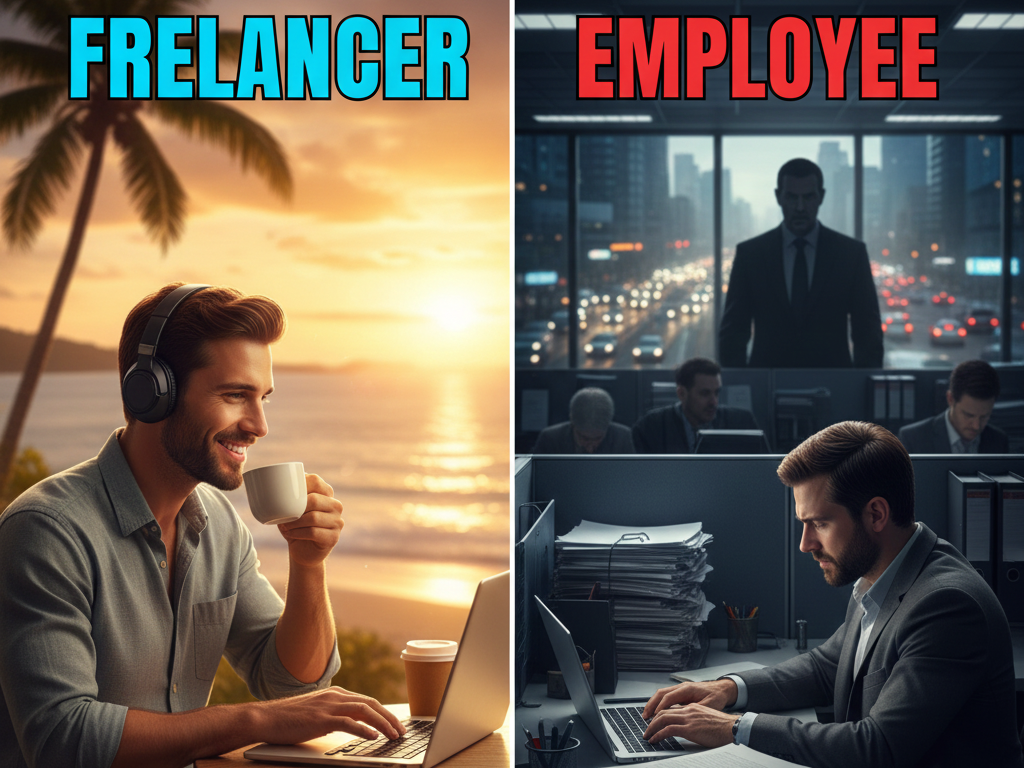
A freelancer’s day may start at 10 AM, include work from a café, client calls, project deadlines, gym breaks, and sometimes late-night working.
An employee’s day usually starts early, includes a long commute, meetings, reporting, fixed lunch breaks, evening exhaustion, and limited personal time.
Freelancers design their day. Employees follow schedules.
Taxes, Benefits & Hidden Costs
Freelancing Costs
- No PF or insurance by default
- Pay own taxes
- Software & tool subscriptions
- Marketing costs
- Internet & electricity
Job Benefits
- PF and gratuity
- Health insurance
- Paid leaves
- Tax deducted at source
- Office facilities
Jobs provide built-in safety nets. Freelancers must create their own financial protection.
Mental Health & Stress Comparison
Freelancers face:
- Income uncertainty
- Client dependency
- Isolation
- Self-pressure
Employees face:
- Office politics
- Micromanagement
- Deadline pressure
- Job insecurity
Stress exists in both, but the source of stress is different.
Who Should Choose Freelancing in 2026?
Freelancing is perfect for people who:
- Love independence
- Can manage uncertainty
- Enjoy learning new tech
- Can market themselves
- Don’t fear failure
- Want fast income growth
- Dream of location freedom
Who Should Choose a Full-Time Job in 2026?

A job is better for people who:
- Need stable income
- Have financial responsibilities
- Prefer fixed routines
- Like team environments
- Avoid risk
- Want structured growth
The Hybrid Career Model: Job + Freelancing
In 2026, the smartest professionals don’t choose only one path. They combine both.
They:
- Do a job for stability
- Freelance for extra income
- Build skills slowly
- Shift full-time only when ready
This hybrid model reduces risk and increases income safely.
Real-Life Examples
A college student learning video editing now earns ₹80,000/month as a freelancer while studying.
A corporate employee earning ₹35,000/month started freelancing and crossed ₹1.2 lakh/month in one year.
A software engineer does a job for stability and freelancing for side income and investments.
These stories are becoming normal in 2026.
Final Verdict: Which Is Better in 2026?
There is no single winner in the Freelancing vs Full-Time Job debate.
Freelancing if you want:
- Financial freedom
- Location independence
- Fast income growth
- Personal brand building
Full-time job if you want:
- Stable income
- Fixed routine
- Company benefits
- Less risk
Both if you want:
- Balanced income
- Safe transition
- Multiple income streams
The best career in 2026 is not a job or freelancing alone — it is a skill-based career that gives you options.
Final Thought
The future does not belong to job holders or freelancers alone.
It belongs to those who learn fast, adapt quickly, and stay valuable in the market.
No matter what you choose — job, freelancing, or both — always invest in your skills. Because in 2026, skills are the new job security 💡