
How AI Analytics Helps You Make Smarter Business Decisions in 2026
In today’s fast-moving business world, companies no longer on slow manual reports to make decisions. The competition is very high, customers demand faster responses, and data keeps growing every second. In this environment, AI analytics has become one of the most powerful tools for making smarter decisions. It allow business to understand trends, predict the future, improve workflows, reduce mistakes, and grow faster.
This blog will help you understand how AI analytics works, why it is so important in 2026, and how businesses of all sizes can use it. Everything is written in a simple, human-friendly style so you can easily understand how AI analytics transforms business decisions.
What Is AI Analytics?
AI analytics simply means using artificial intelligence to study data and extract meaningful insights. In older times, companies used traditional analytics tools that depended heavily on manual work. Analysts have to prepare datasheets and create reports. This process was slow, time-consuming, and often full of human errors.
AI analytics change this completely.
Instead of humans checking data, AI systems automatically analyze many information in seconds. They catch hidden patterns, predict future growth, and help businesses understand what will happen next.
How AI Analytics Is Different from Traditional Analytics
Traditional analytics answers the question:
“What happened?”
AI analytics answers:
“Why did it happen?”
“What will happen next?”
“What should we do now?”
With AI, businesses get:
- More accurate results
- Real-time insights
- Best suggestions
- Automated reporting
- Faster decisions
That’s why companies in every industry are shifting to AI analytics.
Why Businesses Need AI Analytics in 2026
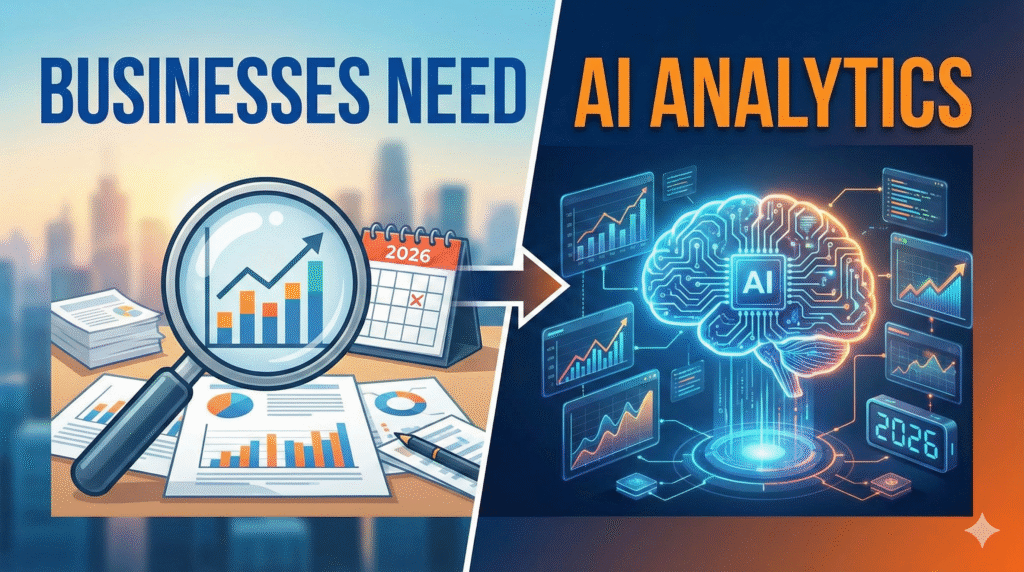
We are living in a data-driven era. Whether it’s a startup or a old company, everyone generates massive amounts of data—customer interactions, website traffic, social media engagement, sales history, invoices, feedback, and more.
In 2026, businesses need Artificial Intelligence analytics because:
1. Data Is Growing Faster Than Ever
Every click, every view, and every purchase creates data. Even a small business can generate thousands of data points daily. Human teams cannot manually analyze this much information.
2. Business Decisions Need to Be Faster
Opportunities don’t wait. Companies need fast answers:
- Which audience is buying?
- What product will sell next month?
- Which marketing channels work best?
- Where are we losing money?
Artificial Intelligence analytics gives instant insights, helping businesses act before it’s too late.
3. Customers Expect Personalization
People want experiences:
- Personalized ads
- Relevant recommendations
- Customized offers
AI understands customer behavior better than human teams, making personalization simple and accurate.
4. Competition Is High
In 2026, brands that use data can grow faster. Artificial Intelligence analytics gives your business a competitive advantage by making your decisions sharper, faster, and smarter.
5. Industries Are Becoming Digital
From E-Commerce to finance, healthcare to education—every sector is becoming digital. Data is at the center of this transformation. It is now essential for every business, not optional.
Key Benefits of AI Analytics
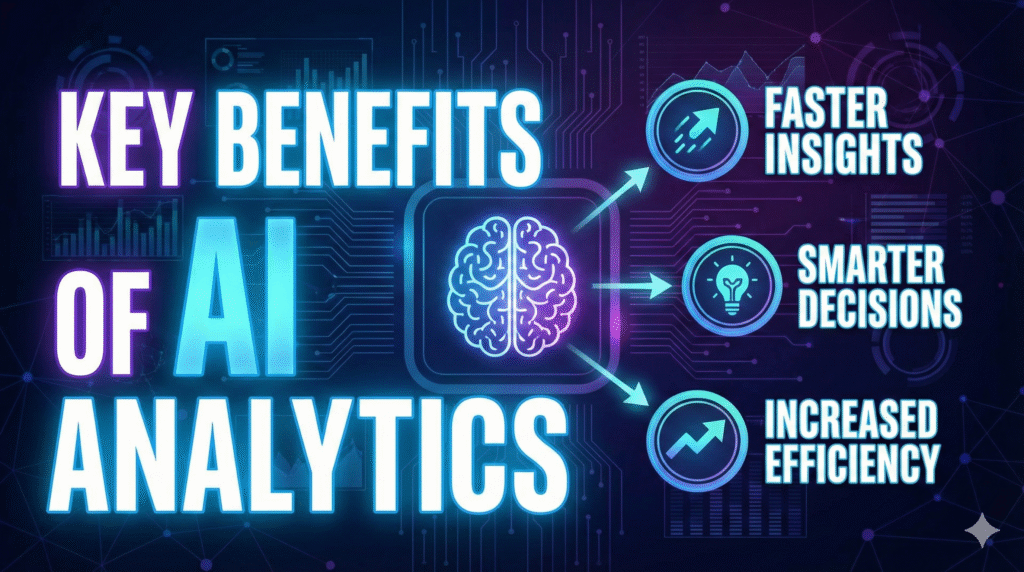
Artificial Intelligence analytics is not just a trend—it’s a powerful asset. Here are the biggest benefits:
1. Real-Time Insights
knowing what’s happening in your business at very moment. Artificial Intelligence analytics tracks data live and shows you:
- Current customer activity
- Website performance
- Real-time sales trends
- Live operational updates
Instead of waiting hours or days for reports, you get instant dashboards that update automatically. This helps businesses respond faster to any change.
2. Predictive Forecasting
One of the strongest abilities of Artificial Intelligence analytics is prediction. AI studies past and present data to forecast:
- Future sales
- Market trends
- Customer behavior
- Product demand
- Potential risks
For example:
- An online store can predict which product will trend next month.
- A restaurant can forecast which menu items will sell more.
- A finance company can predict which customers may default on payments.
Predictive forecasting helps companies plan smarter and make less losses.
3. Better Customer Understanding
It creates a deep understanding of your customers:
- What they like
- Which they avoid
- What time they shop
- Behaviour on across platforms
- What makes them purchase
With this insight, businesses can:
- Segment audiences
- Run more effective marketing campaigns
- Offer personalized suggestions
- Improve customer satisfaction
AI gives businesses a 360-degree view of their customers.
4. Stronger Risk Management
Every business faces risks—market changes, operational issues, financial losses, fraud, delays, and more.
AI analytics helps companies identify risks early by:
- Detecting unusual activities
- Forecasting financial problems
- Alerting teams about fraud patterns
These approach saves businesses from big losses and increases stability.
5. Cost Reduction and Higher Efficiency
AI replaces repetitive manual work such as:
- Data cleaning
- Reporting
- Trend analysis
- Monitoring performance
This reduces the workload on employees and saves time.
Businesses can cut operational costs and improve productivity.
AI analytics allows teams to focus on strategy, creativity, and innovation instead of wasting time on spreadsheets.
How AI Analytics Works
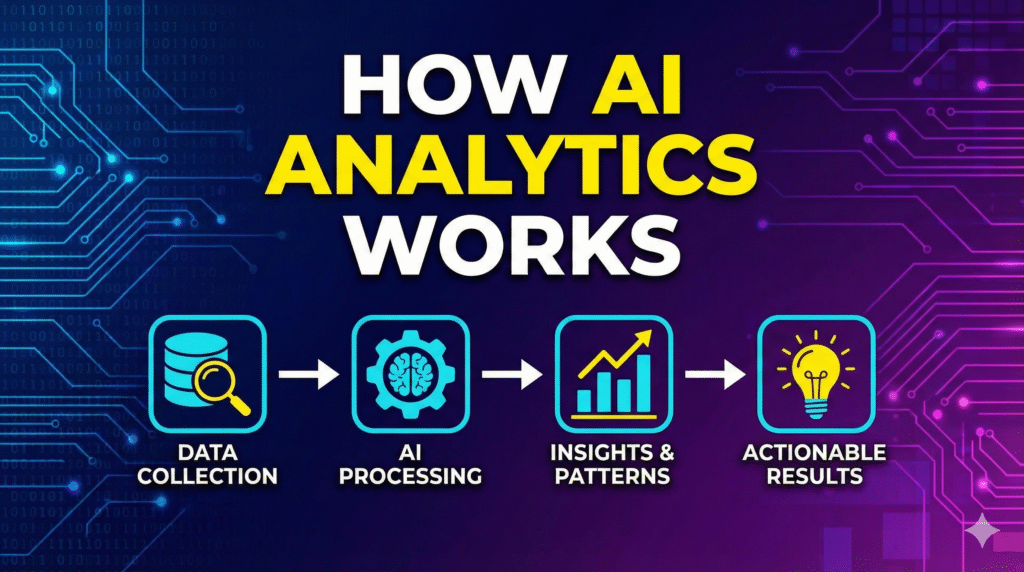
AI analytics may seem complicated, but the process is simple when broken down:
1. Data Collection
AI collects data from multiple sources like:
- Websites
- Social media
- CRM systems
- Sales records
- Customer behavior
- Market reports
This creates a large data source.
2. Data Cleaning and Processing
Raw data often contains errors, duplicates, or incomplete information.
AI automatically:
- Cleans data
- Organizes it
- Removes errors
- Standardizes formats
This ensures accurate and best insights.
3. Machine Learning Models
This is where AI becomes powerful.
Machine learning techniques help AI:
- Identify patterns
- Understand behavior
- Learn from past data
- Predict future results
- Recommend smart actions
The more data AI analyzes, the smarter it becomes.
4. Visualization and Reports
Finally, AI converts complex data into:
- Easy dashboards
- Graphs
- Charts
- Reports
- Alerts
This makes decision-making simple even for non-technical users.
Practical Use of AI Analytics
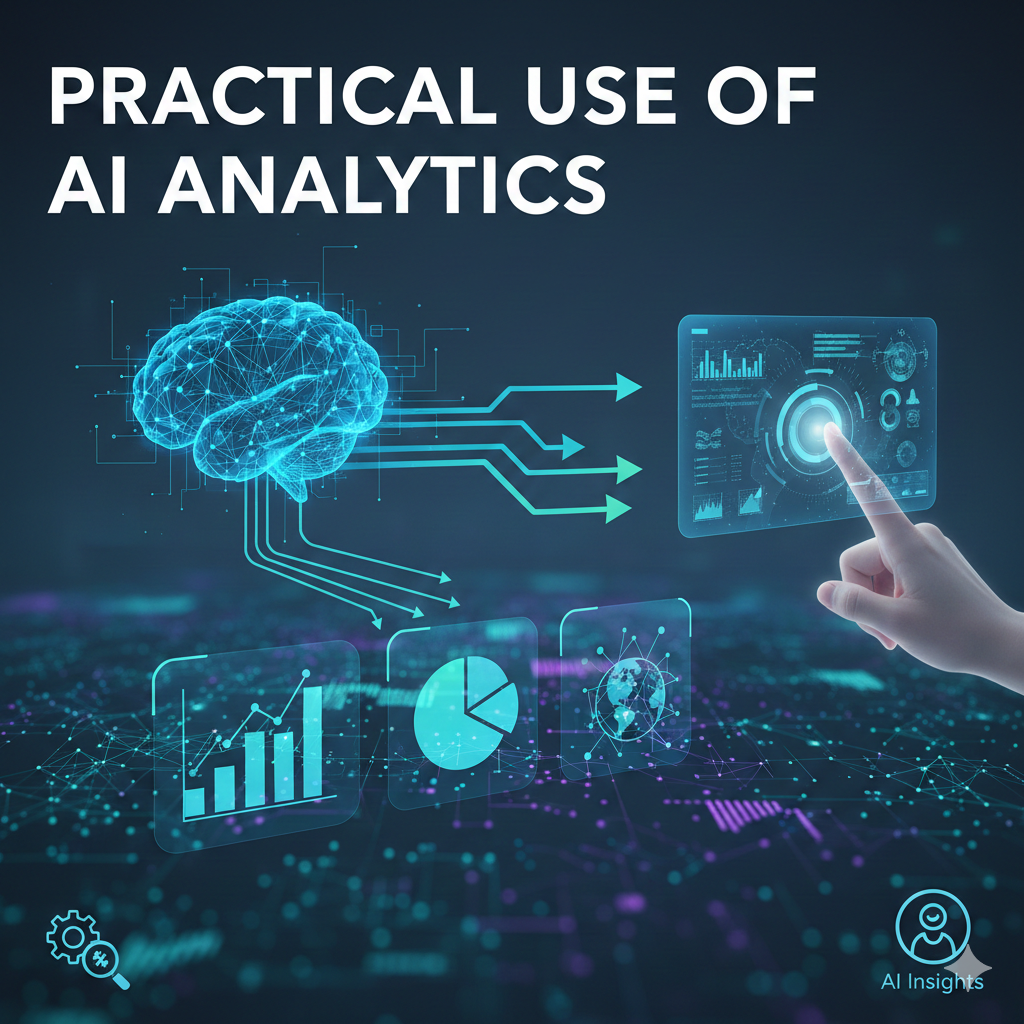
AI analytics is used across every industry. Here are the most common and practical uses:
1. Marketing Analytics
AI helps businesses improve marketing by:
- Identifying customer interests
- Optimizing ad campaigns
- Measuring performance
- Predicting audience behavior
- Personalized targeting
Businesses can reduce ad spend and increase conversions.
2. Sales Insights
AI assists sales teams with:
- Lead scoring
- Revenue forecasting
- Identifying purchase patterns
- Finding upsell opportunities
Sales teams can close more deals with data-backed insights.
3. Finance and Banking
Banks and financial institutions use AI analytics for:
- Fraud detection
- Credit risk assessment
- Automated financial reports
- Investment predictions
It makes transactions more secure and reliable.
4. Operations and Supply Chain
AI analytics improves operations through:
- Inventory forecasting
- Demand prediction
- Supply chain optimization
- Order tracking
- Cost reduction
Businesses can avoid stockouts, delays, and wastage.
5. Human Resources (HR)
AI helps HR teams make smarter decisions by analyzing:
- Employee performance
- Hiring data
- Attrition trends
- Engagement levels
Companies can improve workforce productivity with the help of AI collected insights.
How AI Analytics Helps Different Business Sizes
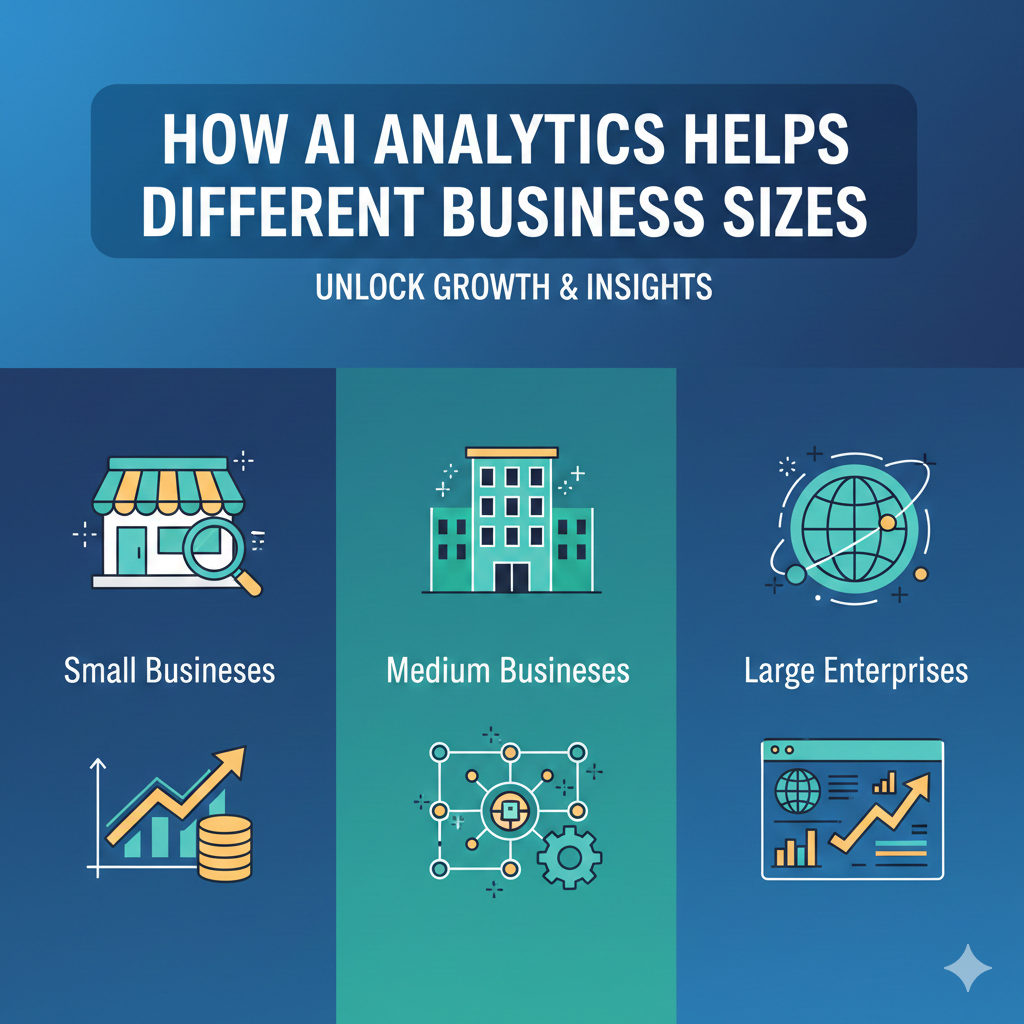
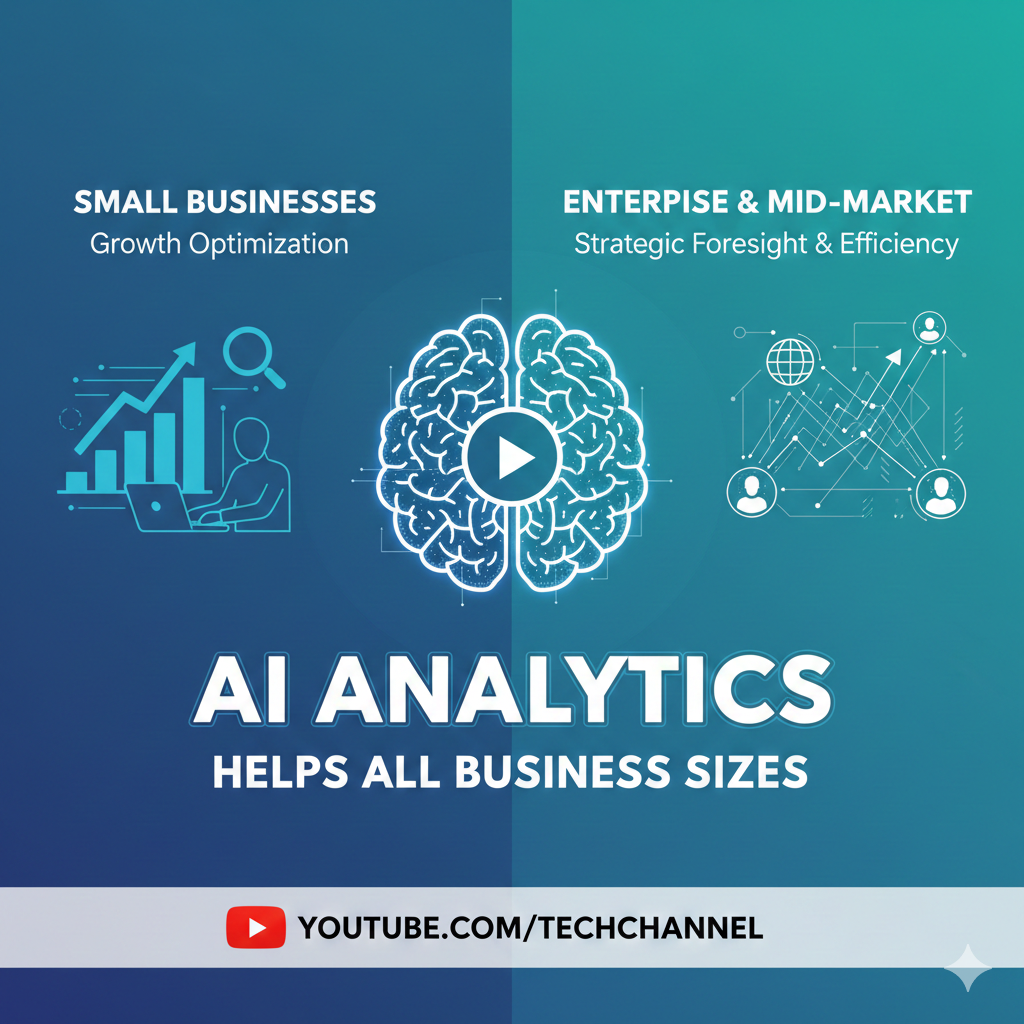
AI analytics is not only for big companies. Every business can use it.
1. Small Businesses
Small businesses benefit through:
- Affordable cloud AI tools
- Social media trend tracking
- Customer preference analysis
- Local marketing insights
AI helps small businesses compete with bigger players.
2. Medium Businesses
Medium-size companies gain:
- Workflow automation
- Customer journey insights
- Performance dashboards
- Better financial predictions
AI boosts productivity and simplifies decision-making.
3. Large Enterprises
Large companies heavily on AI for:
- Handling big data
- Multi-department analytics
- Global supply chain management
- High-level forecasting
- Advanced automation
AI helps them scale efficiently.
Challenges of AI Analytics & Solutions
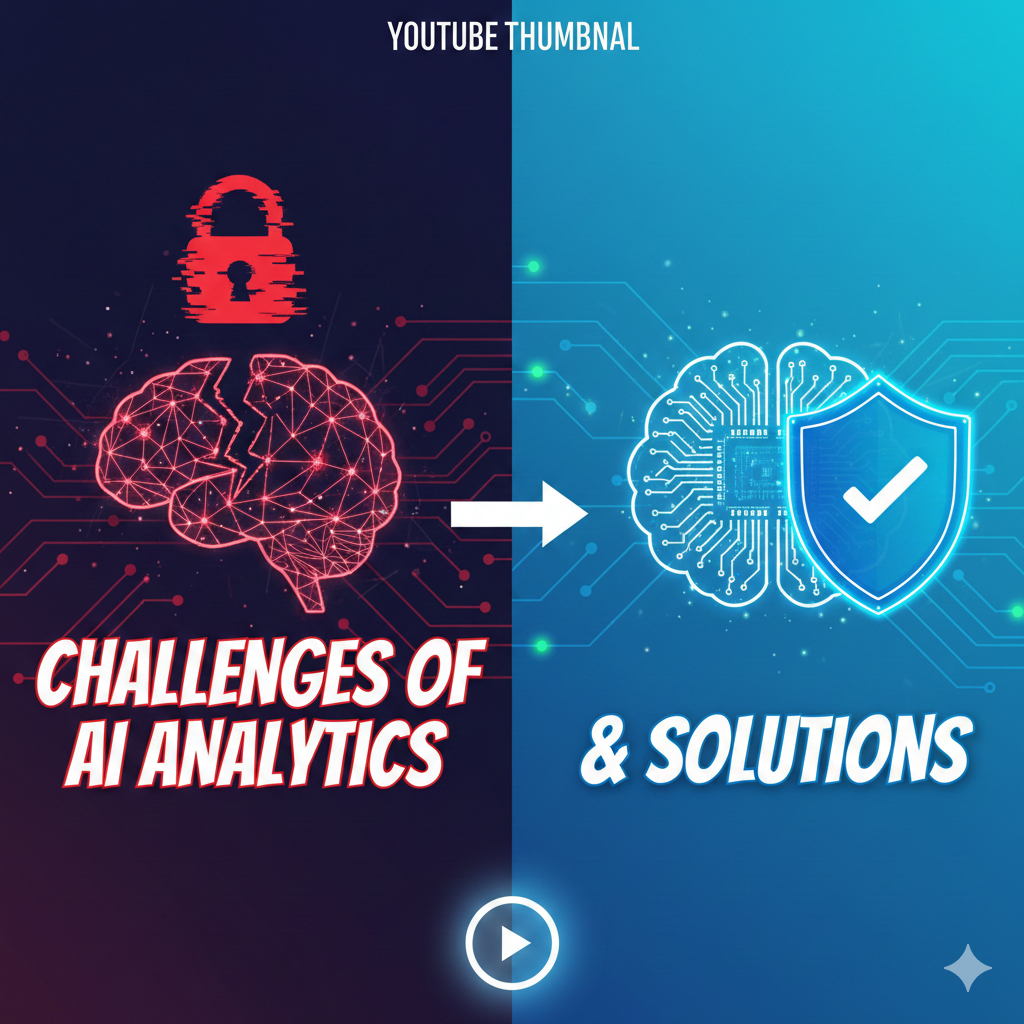
AI analytics is powerful, but companies may face some hurdles.
1. Data Quality Problems
Many businesses struggle with messy or incomplete data.
Solution: AI-based data cleaning tools.
2. Lack of Skilled Analysts
Some companies don’t have trained AI experts.
Solution: No-code AI tools with simple dashboards.
3. High Cost
Some advanced AI tools are expensive.
Solution: Cloud-based AI platforms that are affordable and scalable.
The Future of AI Analytics (2026–2050)
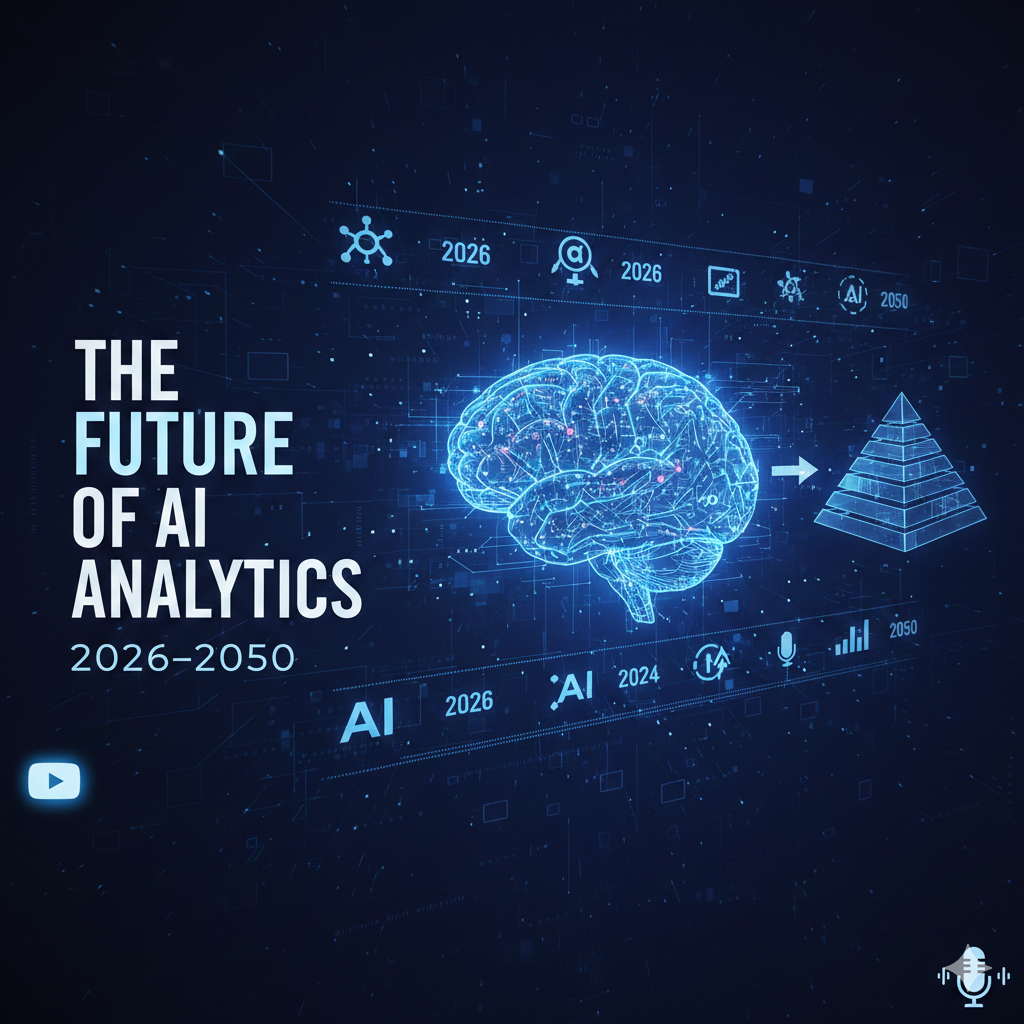
The future looks even more exciting. AI analytics will be:
- More accurate
- Fully automated
- Capable of making autonomous decisions
- Hyper-personalized
- Integrated with every industry
We are seeing AI analytics in daily operations, from customer service to product development. Businesses that adopt AI early will stay ahead of the competition.
Conclusion
AI analytics is no longer just a technology—it is becoming the foundation of modern business decision-making. In 2026, every industry is using AI to understand data, predict the future, reduce risks, save costs, and deliver better customer experiences.
Whether you’re a startup owner, a small business, or a large enterprise, AI analytics helps you make smarter decisions, faster.
Businesses that embrace AI will grow quicker, stay competitive, and succeed in a digital-driven future. Now is the right time to start using AI analytics and transform your business with data-powered insights.
Pingback: Google Algorithm Updates 2026: What Marketers Must Know